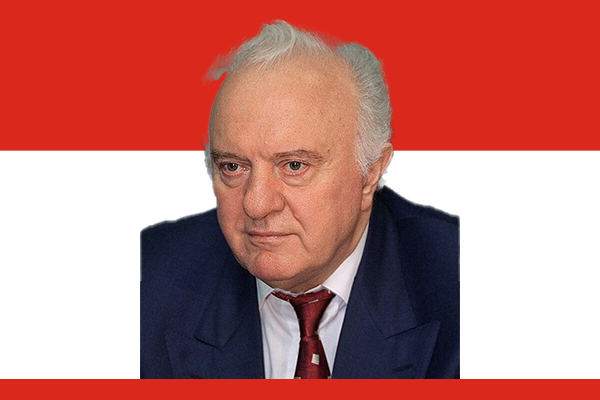
Early Life and Political Rise
Shevardnadze was born into a modest family, and his father was a schoolteacher. From a young age, he showed interest in education and politics. He joined the Communist Party in his early twenties and quickly rose through the ranks. His leadership skills and dedication helped him gain important positions within the Georgian Communist Party.
In 1972, he became the First Secretary of the Georgian Communist Party, which made him the top political leader in Soviet Georgia. During this time, he worked to reduce corruption and improve administration. His anti-corruption campaigns made him popular among citizens and also gained attention in Moscow.
Role as Soviet Foreign Minister
In 1985, Soviet leader Mikhail Gorbachev appointed Shevardnadze as the Foreign Minister of the Soviet Union. This was a very important position, especially during the Cold War. Shevardnadze became one of the key architects of Gorbachev’s reforms, including policies of openness (glasnost) and restructuring (perestroika).
He played a major role in improving relations between the Soviet Union and Western countries, including the United States. His diplomatic efforts helped reduce tensions and contributed to important nuclear arms reduction agreements. Shevardnadze was respected internationally for his peaceful approach and negotiation skills.
However, he resigned in 1990, warning that dictatorship could return to the Soviet Union. His warning later proved to be significant as the Soviet Union collapsed in 1991.
Leadership as President of Georgia
After Georgia gained independence in 1991, the country faced political instability and civil war. In 1992, Shevardnadze returned to Georgia to help restore order. Because of his experience and reputation, he was chosen as the country’s leader.
In 1995, he was officially elected as President of Georgia. During his presidency, Shevardnadze worked to strengthen Georgia’s independence and build international relationships. He helped Georgia join international organizations and improved ties with Western nations.
His leadership helped stabilize the country after years of conflict. He also introduced economic reforms aimed at developing Georgia’s economy.
Challenges and Criticism
Despite his achievements, Shevardnadze’s presidency faced many problems. Georgia struggled with corruption, economic hardship, and political opposition. Many people felt that reforms were slow and conditions were not improving fast enough.
In 2003, widespread protests broke out after disputed parliamentary elections. These protests became known as the Rose Revolution. Citizens demanded change and accused the government of corruption.
As a result, Shevardnadze resigned as president in November 2003 to avoid violence and ensure peace. His resignation marked the end of his long political career.
Legacy and Death
Eduard Shevardnadze died on July 7, 2014, at the age of 86. He is remembered as a leader who played an important role in ending the Cold War and guiding Georgia through a difficult period of independence.
His supporters praise him for his diplomatic achievements and efforts to stabilize Georgia. Critics point to corruption and economic struggles during his presidency. Nevertheless, his influence on both Soviet and Georgian history remains significant.