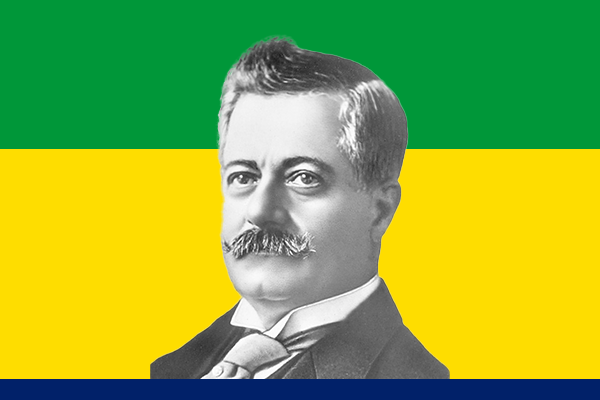
Early Life and Education
Epitácio Lindolfo da Silva Pessoa was born on May 23, 1865, in Umbuzeiro, Paraíba, Brazil. He grew up in modest circumstances but displayed remarkable intelligence and determination. His relatives supported his education after his parents passed away early. Pessoa pursued law at the Faculty of Law in Recife, where he excelled academically and developed a passion for justice and governance. His education became the foundation for his later career as a jurist and statesman.
Rise in Public Service
Pessoa began his public service as a prosecutor in Paraíba. He quickly earned a reputation for integrity and efficiency. His commitment to justice led him to enter politics, where he represented his home state in the Chamber of Deputies. He played an active role in drafting legislation that promoted modernization and improved public administration. His legal expertise and persuasive oratory helped him gain national recognition, paving the way for higher responsibilities.
Contributions as Minister and Jurist
Before his presidency, Pessoa served as Minister of Justice under President Campos Sales. In this role, he introduced significant reforms in the judiciary system to ensure transparency and efficiency. He advocated for the modernization of legal codes and worked to enhance the independence of the judiciary. Later, he represented Brazil at international conferences and served as a judge at the Permanent Court of Arbitration in The Hague. His diplomatic skill elevated Brazil’s image on the global stage and established him as a respected international figure.
Presidency and Post-War Challenges
In 1919, Epitácio Pessoa was elected President of Brazil while serving abroad. He returned to assume office during a turbulent period following World War I. Pessoa actively addressed economic and social challenges that arose from global instability. He launched public works to stimulate employment and improve infrastructure. His administration built roads, bridges, and railways that connected remote regions and promoted national integration. Pessoa also encouraged agricultural and industrial expansion to stabilize Brazil’s economy.
Educational and Social Reforms
President Pessoa believed that education could transform society. He expanded public schooling and strengthened teacher training institutions. His government promoted literacy campaigns and created opportunities for youth in underdeveloped regions. Pessoa also supported social welfare programs to improve public health and combat epidemics that affected rural communities. His policies aimed to bridge regional disparities and foster national unity.
Handling Political Conflicts
Despite his achievements, Pessoa faced political opposition and social unrest. Regional leaders often resisted his centralizing policies. When drought struck the Northeast, he organized relief efforts but faced criticism for their execution. He confronted military dissent and civil protests with firmness, emphasizing the need for order and stability. Although conflicts persisted, he managed to preserve the constitutional framework and democratic governance.
Diplomatic and Economic Vision
Pessoa strengthened Brazil’s diplomatic ties with European nations and the United States. He encouraged foreign investment in agriculture and infrastructure while maintaining national sovereignty. His economic vision combined modernization with cautious fiscal management. Under his leadership, Brazil regained financial stability and continued its post-war recovery.
Legacy and Later Years
After his presidency ended in 1922, Epitácio Pessoa returned to public service as a senator and continued his international judicial career. He remained a respected voice in legal and political circles. His leadership symbolized dedication, intellect, and patriotism. Pessoa died on February 13, 1942, leaving behind a legacy of reform and modernization that influenced future Brazilian administrations.
Conclusion
President Epitácio Pessoa actively guided Brazil through one of its most challenging post-war transitions. His legal reforms, economic initiatives, and commitment to education reflected his vision of a modern and united nation. Although his tenure faced criticism and adversity, Pessoa’s efforts strengthened Brazil’s institutions and national identity, securing his place among the country’s most influential early 20th-century leaders.