Mr. Fernando de Araújo
In Office: 13 February 2008 – 17 April 2008
Political Party: Independent
Home State: Dili
Lifespan: 1962–2015
Country: Timor-Leste
Image credits available here.
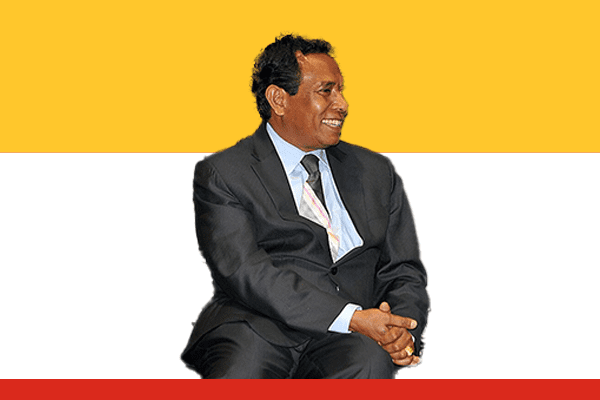
Fernando de Araújo
Fernando de Araújo was a prominent political leader of Timor-Leste (East Timor) who played a significant role in the country’s struggle for independence and its early years as a sovereign nation. Born on 26 February 1962 in Manutasi, Ainaro District, he grew up during a period of political uncertainty that deeply shaped his future. When Indonesia invaded East Timor in 1975, the country entered a long and painful period of occupation. As a young man, Araújo became actively involved in the resistance movement, dedicating his life to the cause of freedom and democracy.
Araújo was a member of the Revolutionary Front for an Independent East Timor, commonly known as Fretilin. During the Indonesian occupation, he worked underground to organize resistance activities and support independence efforts. His activism led to his arrest by Indonesian authorities in 1992. He spent several years in prison, where he became known as a strong and determined political prisoner. Despite harsh conditions, he continued advocating for Timorese self-determination and maintained his commitment to peaceful political struggle.
After the 1999 referendum, in which the people of East Timor voted overwhelmingly for independence, the country began its transition toward sovereignty. Araújo emerged as a key political figure during this critical period. In 2001, he became the leader of the Democratic Party (PD), a political party that gained significant support, especially among young voters and urban communities. His leadership style was often described as firm yet focused on democratic principles and national unity.
In 2007, Fernando de Araújo was elected as President of the National Parliament of Timor-Leste. This was a historic moment because it demonstrated the strength of the young nation’s democratic institutions. As President of Parliament, he worked to promote dialogue among political parties and ensure that parliamentary procedures were respected. His tenure reflected his commitment to stability and cooperation in a country still recovering from internal tensions and political crises.
Later in 2007, Araújo briefly served as acting President of Timor-Leste after President José Ramos-Horta traveled abroad for medical treatment following an assassination attempt. During this challenging time, Araújo fulfilled his constitutional responsibilities carefully and responsibly, ensuring continuity in governance. His calm leadership during a period of uncertainty earned him respect across political lines.
Throughout his political career, Araújo emphasized youth participation, transparency, and national development. He believed that Timor-Leste’s future depended on education, strong democratic institutions, and peaceful political engagement. Even after stepping down from some leadership roles, he remained active in public service and continued advocating for democratic reforms.
Fernando de Araújo passed away on 2 June 2015 in Dili at the age of 53. His death was widely mourned across Timor-Leste. Many citizens remembered him not only as a politician but also as a freedom fighter who endured imprisonment for his country’s independence. His contributions to the resistance movement and to the establishment of democratic governance left a lasting impact on the nation.
Today, Araújo is regarded as one of the important figures in Timor-Leste’s modern political history. His life reflects the broader story of the country’s struggle—from occupation and conflict to independence and democratic growth. Through resilience, courage, and dedication, Fernando de Araújo helped shape the foundations of a young nation striving for peace and progress.