TIMOR LESTE
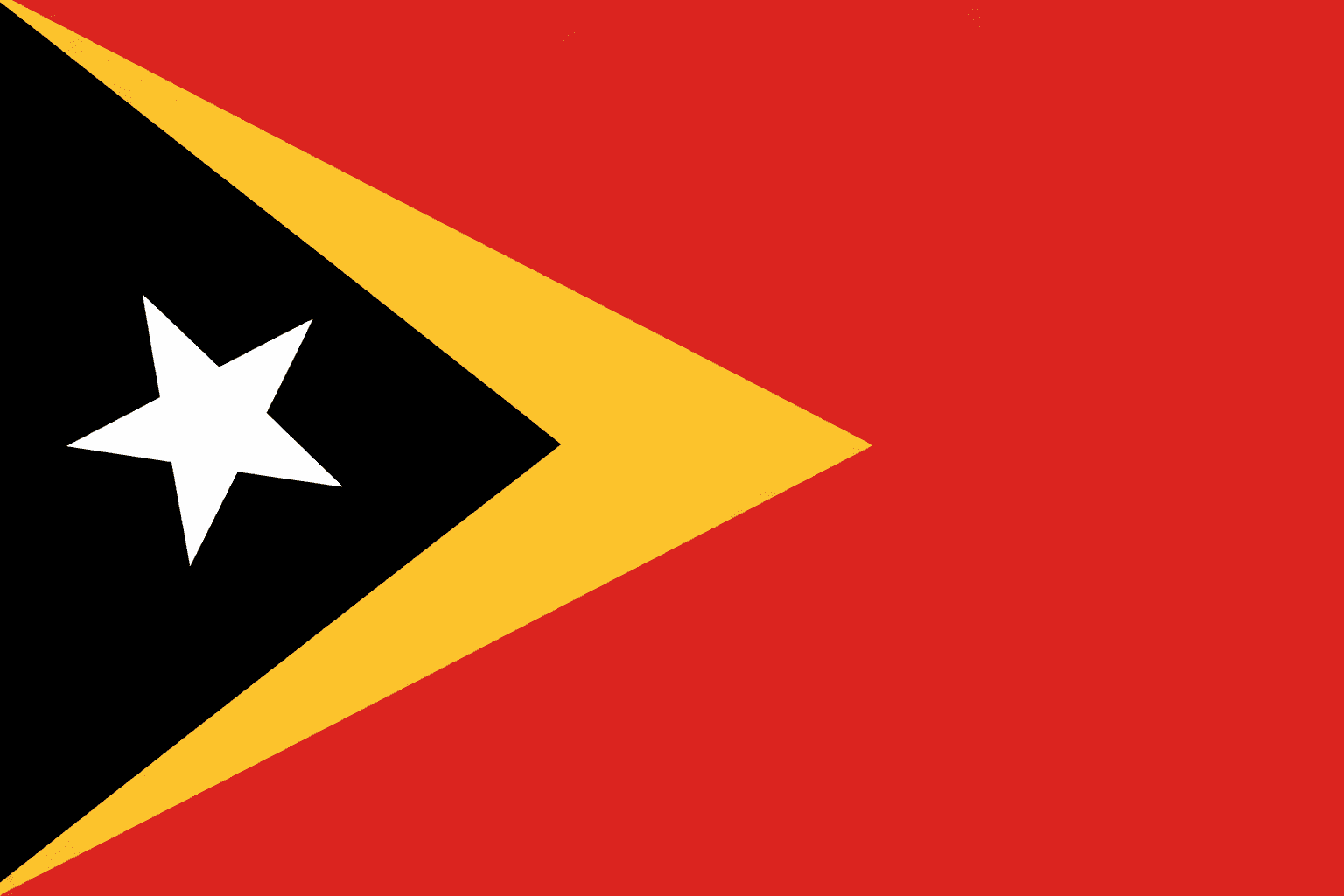
Timor-Leste Flag
The flag of Timor-Leste features a red background with a black triangle edged in yellow on the hoist side and a white five-pointed star at the center of the black triangle. The red color represents the struggle for independence, yellow symbolizes the traces of colonialism, and black reflects past hardships. The white star stands for peace and hope, guiding the nation toward a bright future. The flag was officially adopted in 2002 after independence.
Overview
Timor-Leste – Country Overview
Timor-Leste, also known as East Timor, is a small island nation in Southeast Asia. It is located on the eastern half of the island of Timor, sharing a land border with Indonesia to the west. The country also includes the Oecusse enclave and several smaller islands such as Atauro and Jaco. Timor-Leste gained full independence on 20 May 2002, becoming one of the youngest countries in the world.
Capital and Major Cities
The capital city of Timor-Leste is Dili, which is the political, economic, and cultural center of the country. Dili is located along the northern coast and serves as the main port and commercial hub. Other important towns include Baucau, Maliana, and Suai.
Geography and Climate
Timor-Leste has a mountainous landscape with rugged terrain and beautiful coastlines. The country experiences a tropical climate, with a wet season from November to April and a dry season from May to October. Due to its geography, agriculture plays an important role in the lives of many citizens, especially in rural areas.
Population and Language
The population of Timor-Leste is around 1.3 million people. The official languages are Tetum and Portuguese. Indonesian and English are also widely used. The people of Timor-Leste belong to various ethnic groups, with a strong sense of cultural identity and tradition.
History
Portuguese colony for more than 400 years. In 1975, after Portugal withdrew, Indonesia invaded and annexed the territory. During this period, many Timorese people struggled for independence under the leadership of figures like Xanana Gusmão. After years of conflict and international pressure, a United Nations–supervised referendum was held in 1999, in which the majority voted for independence. Finally, in 2002, Timor-Leste became a sovereign nation.
Government and Economy
Timor-Leste is a democratic republic with a semi-presidential system. The President is the head of state, while the Prime Minister is the head of government. The country’s economy largely depends on oil and natural gas resources in the Timor Sea. Agriculture, coffee production, and fishing are also important sources of income.
Culture and Religion
Roman Catholicism is the dominant religion in, influencing many cultural traditions and festivals. Traditional music, dance, and handicrafts remain important parts of daily life. The people celebrate national events such as Independence Day with pride and unity.
Conclusion
Timor-Leste is a young and developing nation with a rich history and strong cultural heritage. Despite facing economic and social challenges, the country continues to grow and strengthen its democratic institutions. Its journey to independence remains an inspiring example of determination and resilience.