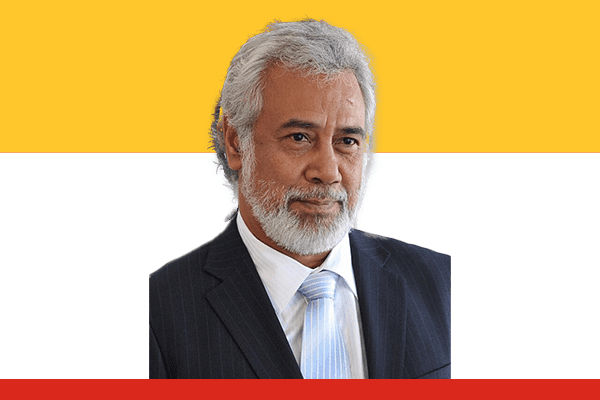
Mr. Xanana Gusmão
In Office: 20 May 2002 – 20 May 2007
Political Party: Independent
Home State: Manatuto
Lifespan: born 1946
Country: Timor-Leste
Image credits available here.
Early Life and Background
Xanana Gusmão was born in Manatuto, a coastal town in East Timor, which was then a Portuguese colony. Growing up during the colonial period, he received his early education from Jesuit missionaries. Before entering politics, he worked as a civil servant and journalist. His early exposure to literature and political thought helped shape his nationalist ideas. During the 1970s, as Portugal began decolonizing its territories, political movements emerged in East Timor, and Gusmão became actively involved in the struggle for self-determination.
Role in the Independence Movement
In 1975, East Timor declared independence from Portugal. However, shortly afterward, Indonesia invaded and annexed the territory. Gusmão became a key leader in the resistance movement against Indonesian rule. He joined the Revolutionary Front for an Independent East Timor (FRETILIN) and later became commander of its armed wing, Falintil. Under his leadership, the resistance transformed from a party-based struggle into a broader national movement that united various factions.
Despite facing overwhelming military pressure, Gusmão inspired the Timorese people to continue their fight for freedom. In 1992, Indonesian authorities captured him, and he was sentenced to life imprisonment (later reduced). Even in prison, he remained an influential symbol of resistance. International pressure and negotiations eventually led to his release in 1999, following a UN-sponsored referendum in which the people of East Timor voted overwhelmingly for independence.
Presidency and Nation-Building
After East Timor officially became independent in 2002, Xanana Gusmão was elected as the country’s first President. As President (2002–2007), he focused on reconciliation, peace-building, and strengthening democratic institutions. His leadership was crucial during the early, fragile years of independence. He worked to maintain national unity and encouraged cooperation among political groups.
Following his presidency, Gusmão served as Prime Minister from 2007 to 2015. In this role, he concentrated on infrastructure development, economic planning, and improving relations with neighboring countries, especially Indonesia and Australia. His pragmatic approach helped stabilize the country after internal unrest in 2006.
Leadership Style and Vision
Xanana Gusmão is known for his charismatic leadership and ability to connect with ordinary citizens. He emphasized forgiveness and reconciliation rather than revenge after independence, promoting peaceful coexistence. His vision for East Timor includes sustainable development, poverty reduction, and stronger regional integration within Southeast Asia.
Throughout his political career, Gusmão has faced criticism and challenges, including political instability and economic dependency on oil revenues. Nevertheless, he remains a respected national figure whose influence extends beyond party politics.
Legacy and Continuing Influence
Gusmão’s legacy is deeply intertwined with the birth of East Timor as a sovereign state. He is often described as the “father of the nation” due to his role in leading the resistance and shaping the country’s democratic foundations. His personal sacrifices, including years of imprisonment, strengthened his moral authority.
In later years, Gusmão continued to serve in high political office, demonstrating his ongoing commitment to national development. His life story reflects the broader journey of East Timor—from colonial rule and occupation to independence and statehood.
Xanana Gusmão’s enduring impact lies not only in his political achievements but also in his dedication to unity, peace, and nation-building. He remains one of Southeast Asia’s most prominent leaders and a symbol of resilience and hope for the Timorese people.