Mr. Gamal Abdel Nasser
In Office: 22 February 1958 – 28 September 1961
Political Party: National Union
Home State: Alexandria
Lifespan: 1918–1970
Country: Syria
Image credits available here.
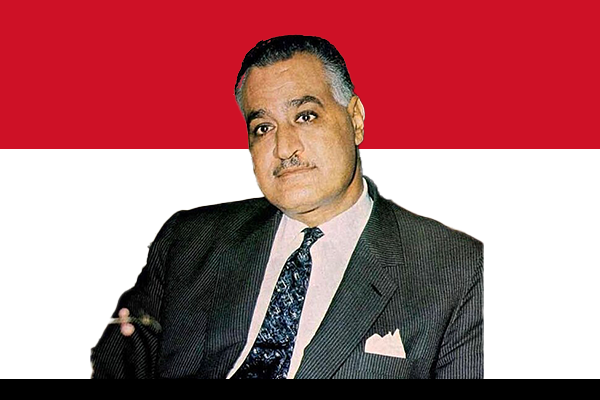
Early Life and Rise to Power
Gamal Abdel Nasser was born in 1918 in Alexandria, Egypt. From an early age, he developed a strong sense of nationalism, shaped by Egypt’s struggle against British dominance. He joined the Egyptian Military Academy, where he formed close ties with like-minded officers who shared his vision of national independence. This group later became known as the Free Officers Movement.
In 1952, the Free Officers led a successful revolution that overthrew King Farouk, ending the monarchy in Egypt. Although Muhammad Naguib initially became president, Nasser soon emerged as the dominant leader. By 1956, he officially assumed the presidency, consolidating power and setting Egypt on a new political path.
Nationalization and Economic Reforms
One of Nasser’s most defining actions was the nationalization of the Suez Canal in 1956. This bold move aimed to reclaim Egypt’s economic sovereignty and fund the construction of the Aswan High Dam. Although it triggered a military response from Britain, France, and Israel, international pressure forced their withdrawal, turning Nasser into a hero across the Arab world.
Domestically, Nasser introduced sweeping economic reforms. He promoted socialism through land redistribution, nationalization of major industries, and expansion of the public sector. These policies sought to reduce inequality, empower peasants and workers, and build a self-reliant national economy. While they achieved mixed economic results, they significantly altered Egypt’s social structure.
Arab Nationalism and Foreign Policy
Nasser became the leading voice of Arab nationalism, advocating unity and independence for Arab nations. He envisioned a united Arab world free from foreign domination. This vision briefly materialized in the formation of the United Arab Republic between Egypt and Syria in 1958, though the union dissolved a few years later.
In global politics, Nasser played a prominent role in the Non-Aligned Movement. He refused to align Egypt strictly with either the Western or Eastern bloc during the Cold War, instead pursuing an independent foreign policy. His stance enhanced Egypt’s international standing and attracted support from newly independent nations.
Challenges and Setbacks
Despite his popularity, Nasser’s leadership faced serious challenges. The most significant setback came in 1967 during the Six-Day War, when Egypt and other Arab states suffered a swift and devastating defeat by Israel. The loss of the Sinai Peninsula deeply affected Egypt’s military and national morale. Although Nasser briefly offered to resign, massive public demonstrations urged him to remain in power.
Following the defeat, Nasser focused on rebuilding the armed forces and restoring national confidence. His determination during this period reinforced his image as a resilient leader committed to his nation.
Legacy and Historical Significance
Gamal Abdel Nasser died in 1970, leaving behind a powerful and complex legacy. He transformed Egypt into a central force in Arab and African politics and inspired generations with his message of dignity, independence, and social justice. While critics debate the economic efficiency and political authoritarianism of his rule, his impact on regional identity and anti-colonial movements remains undeniable.
Nasser is remembered not only as Egypt’s president but as a symbol of an era defined by hope, struggle, and the pursuit of national pride.