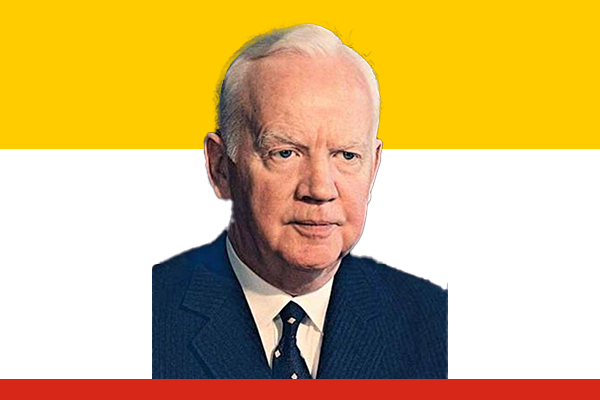
Early Life and Education
Heinrich Lübke was born on October 14, 1894, in Enkhausen, a small village in Westphalia, Germany. Coming from a modest family, he grew up with strong Christian values and a deep sense of social responsibility. He studied agriculture and engineering at Bonn University, showing early interest in rural development and social reform. His background in agricultural science shaped his later contributions to national agricultural policies and rural modernization.
Early Political Career
Lübke began his political career during the Weimar Republic as a member of the Centre Party. He focused on agricultural reform and rural welfare. However, when the Nazi regime rose to power, he distanced himself from active politics. After World War II, he joined the Christian Democratic Union (CDU), believing that democracy and Christian values could rebuild a morally responsible Germany.
Role in Post-War Reconstruction
After 1945, Lübke played a key role in rebuilding Germany’s agricultural sector. He served as Minister of Food, Agriculture, and Forestry from 1953 to 1959 under Chancellor Konrad Adenauer. He promoted modern farming methods, rural electrification, and technological innovation. Lübke helped transform Germany’s rural economy and supported the European Economic Community’s agricultural integration, contributing to Europe’s shared prosperity.
Presidency (1959–1969)
Heinrich Lübke became President of the Federal Republic of Germany in 1959, succeeding Theodor Heuss. During his presidency, he worked to restore Germany’s international credibility and promote peace in a divided world. He represented West Germany abroad with dignity and strengthened ties with countries in Europe, Africa, and Asia.
Lübke supported Chancellor Konrad Adenauer’s pro-Western policies and encouraged cooperation within NATO. He emphasized moral leadership and humanitarian values, believing that Germany’s future depended on reconciliation and responsible governance.
During his presidency, Lübke visited many developing countries, offering support for education, agriculture, and infrastructure projects. His diplomatic visits to Africa and Asia symbolized Germany’s peaceful re-engagement with the world after the devastation of the war.
Challenges and Criticism
Despite his achievements, Lübke faced criticism during his later years in office. His health declined, and his public speeches sometimes caused controversy due to occasional errors. Political opponents used these incidents to question his ability to serve effectively. Allegations related to his work as an architect during the Nazi period also emerged, although no solid evidence proved his involvement in war crimes.
Amid these challenges, Lübke maintained his dignity and sense of duty. In 1969, he decided to resign before his second term ended, prioritizing the office’s integrity over personal ambition. His resignation reflected his deep respect for democratic principles and public service.
Legacy
Heinrich Lübke left behind a legacy of moral leadership and national reconstruction. He strengthened Germany’s global reputation as a peaceful and democratic nation. His efforts to improve rural life and support developing nations reflected his humanitarian outlook. People remember him as a humble, principled leader who bridged the gap between Germany’s troubled past and its democratic future.
Lübke passed away on April 6, 1972, in Bonn. His life symbolized Germany’s transformation from destruction to democracy and from isolation to international cooperation.
Conclusion
President Heinrich Lübke played a vital role in post-war Germany’s recovery and moral renewal. Through his dedication to democracy, diplomacy, and development, he helped shape a new German identity based on peace and progress. His presidency remains a testament to integrity, humility, and the power of reconciliation in leadership.