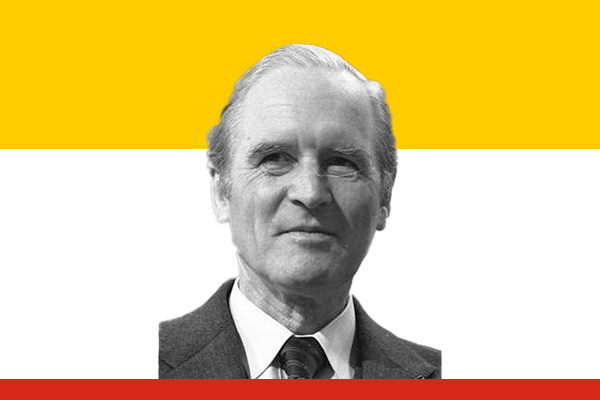
Early Life and Education
Karl Carstens was born on December 14, 1914, in Bremen, Germany. He grew up in a middle-class family and developed an early interest in law and politics. He studied law and political science at universities in Frankfurt, Munich, Königsberg, and Hamburg. After earning his doctorate in law, he began his career as a legal scholar and later became involved in public service. His academic background and disciplined character shaped his approach to governance and political responsibility.
Early Career and Political Involvement
After World War II, Carstens joined the newly formed Christian Democratic Union (CDU) in 1955. He believed in the principles of democracy, European unity, and responsible leadership. Before entering high-level politics, he served as a civil servant and diplomat, where he gained experience in foreign affairs and international cooperation. His work in the Federal Ministry of Defense and the Foreign Office helped him understand both the domestic and global challenges Germany faced during the Cold War era.
Rise in Government Service
Carstens advanced quickly through the political ranks due to his efficiency and sense of duty. In 1960, he became the Secretary of State in the Ministry of Defense, and later, in 1967, he took the same position in the Foreign Office. His precise administrative style and strong sense of discipline earned him respect among colleagues. From 1970 to 1972, he served as the head of the Federal Chancellery under Chancellor Kurt Georg Kiesinger. During this period, he advised the government on constitutional and foreign policy matters.
Role in the Bundestag and Political Leadership
Karl Carstens entered the Bundestag (German Parliament) in 1972 as a CDU representative. His deep knowledge of law and foreign policy made him a valuable member of the legislative body. In 1976, he became the President of the Bundestag, a role in which he managed parliamentary sessions with fairness and authority. He promoted respectful debate, democratic transparency, and cooperation among political parties. His leadership in the Bundestag prepared him for the presidency, where he would represent the nation as a symbol of unity.
Presidency of the Federal Republic of Germany
Karl Carstens became President of West Germany on July 1, 1979. As head of state, he focused on promoting democracy, encouraging civic responsibility, and fostering national pride. He traveled widely across the country, meeting citizens and supporting cultural and educational programs. He believed the president should serve as a moral example rather than a political figure.
Carstens also represented Germany internationally, strengthening diplomatic ties and emphasizing peace and cooperation in Europe. He supported NATO’s policies during the Cold War and encouraged dialogue with Eastern Bloc countries. His presidency reflected stability and respect for democratic traditions.
Later Life and Legacy
Karl Carstens retired from office in 1984 and withdrew from public life. He spent his later years in Bremen, where he remained a respected figure for his integrity and patriotism. He passed away on May 30, 1992, leaving behind a legacy of dedicated public service.
Carstens is remembered as a president who valued honesty, discipline, and the rule of law. He strengthened public trust in government institutions and inspired confidence in Germany’s democratic future.
Conclusion
Karl Carstens served Germany with dignity and devotion during a critical period in its history. His presidency symbolized stability, unity, and moral leadership. Through his commitment to democratic ideals and civic duty, he helped shape West Germany into a respected democratic state on the global stage.