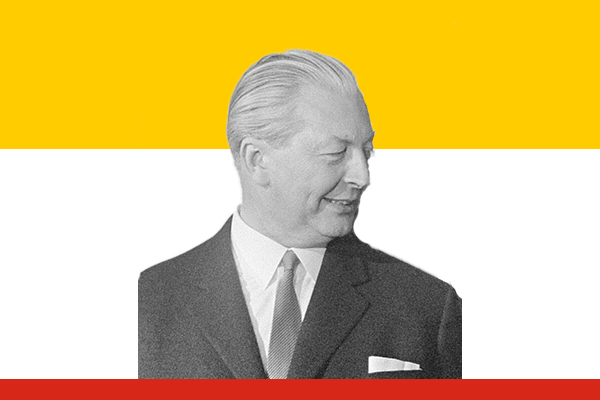
Early Life and Education
Kurt Georg Kiesinger was born on April 6, 1904, in Ebingen, Württemberg. He grew up in a middle-class family and excelled academically. He studied law and political science at the University of Tübingen, earning his doctorate in 1927. Kiesinger pursued an early career in law and quickly gained recognition for his analytical skills and understanding of government administration.
Political Career Before Chancellorship
Kiesinger joined the Nazi Party in 1933, like many contemporaries pursuing government careers under the regime. After World War II, he faced scrutiny but remained active in politics. He joined the Christian Democratic Union (CDU) in 1946 and worked diligently in regional politics. Kiesinger served as Minister-President of Baden-Württemberg from 1958 to 1966, implementing economic policies and building coalitions that balanced social and industrial interests.
Becoming Chancellor
In 1966, Kiesinger became Chancellor of West Germany, leading a grand coalition between his CDU/CSU and the Social Democratic Party (SPD). This coalition brought together the country’s two largest parties to address economic recession, political instability, and social unrest. Kiesinger prioritized collaboration, compromise, and pragmatic policymaking, emphasizing the need for national unity.
Domestic Policies
Kiesinger’s administration implemented several key domestic policies. He strengthened social welfare programs, modernized infrastructure, and promoted economic stability during a period of moderate recession. Kiesinger also worked to improve education and cultural programs, believing that economic prosperity required an informed and skilled populace. His government passed legislation to regulate public finances, promote housing development, and encourage industrial growth.
Foreign Policy and Diplomacy
Kiesinger pursued active diplomacy to reinforce West Germany’s international position. He continued Chancellor Konrad Adenauer’s policy of alignment with NATO and close cooperation with Western allies. Kiesinger’s government worked to ease tensions with Eastern Europe while maintaining a strong stance against Soviet influence. His administration also participated in early negotiations on European integration, supporting economic collaboration and political dialogue within the European Economic Community.
Controversies and Challenges
Kiesinger faced criticism for his prior Nazi Party membership, which opponents used to question his moral authority. He responded by focusing on tangible achievements and demonstrating political prudence. Despite these controversies, Kiesinger maintained coalition stability and oversaw significant legislative progress. His leadership style relied on consensus-building, careful negotiation, and a commitment to institutional integrity.
Legacy
Kurt Georg Kiesinger left a lasting imprint on West German politics. His grand coalition set a precedent for cooperation across party lines during challenging times. He strengthened democratic institutions, promoted economic stability, and advanced West Germany’s position in international affairs. Kiesinger’s tenure demonstrated that pragmatic leadership and political compromise could guide a nation through turbulent social and economic periods.
Conclusion
Kurt Georg Kiesinger contributed significantly to modern Germany as a lawyer, regional leader, and Chancellor. Through coalition-building, diplomatic engagement, and domestic reforms, he guided the country during a critical phase of development. His leadership emphasized stability, compromise, and forward-looking policies, securing his place in Germany’s post-war political history.