Mr. Kim Jong Il
In Office: 9 April 2009 – 17 December 2011
Political Party: Workers’ Party of Korea
Home State: Pyongyang
Lifespan: 1941-2011
Country: North Korea
Image credits available here.
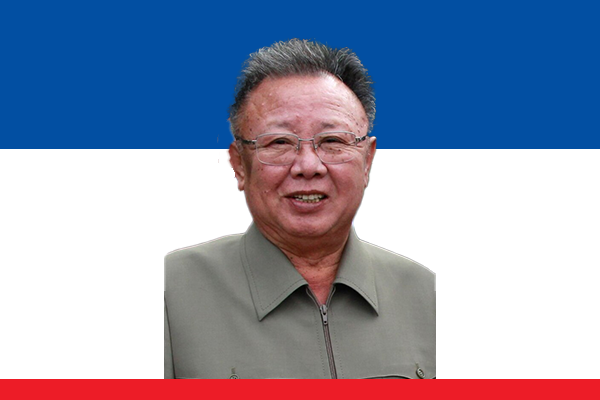
Early Life and Political Background
Kim Jong Il was born in 1941 and was the eldest son of Kim Il Sung, the founder of the Democratic People’s Republic of Korea (DPRK). From an early age, the state carefully prepared him for leadership. He received education that emphasized ideology, loyalty, and revolutionary values. During his youth, developed a strong understanding of propaganda, party organization, and political control, which later became key tools in his leadership style.
Rise to Power
Kim Jong Il gradually rose within the Workers’ Party of Korea during the 1970s and 1980s. He took control of major party departments, especially those related to propaganda and organization. After the death of Kim Il Sung in 1994, Kim Jong Il officially became the supreme leader. Although he did not immediately assume the title of president, he consolidated power as the head of state through his authority over the party, military, and government.
Leadership Style and Governance
As head of state, Kim Jong Il ruled with a highly centralized and authoritarian approach. He strengthened the cult of personality around himself, portraying his leadership as essential for the survival of the nation. His governance relied heavily on strict discipline, loyalty, and control of information. The government maintained tight restrictions on media, movement, and expression, ensuring that dissent remained minimal.
Military-First Policy
One of the defining features of rule was the “Songun” or military-first policy. He prioritized the armed forces above all other institutions, believing that a strong military ensured national security and regime stability. This policy increased the influence of the military in political decision-making and shaped North Korea’s domestic and foreign policies.
Economic Challenges and Famine
Kim Jong Il’s leadership period witnessed severe economic difficulties. In the 1990s, North Korea faced widespread famine due to natural disasters, economic mismanagement, and the collapse of external support. Despite these hardships, Kim Jong Il maintained his political authority. The government relied on limited economic reforms and international aid while continuing to emphasize self-reliance.
Foreign Relations and Nuclear Program
Internationally, remained a central figure in global discussions on security. His government pursued nuclear and missile programs, which attracted global attention and sanctions. While relations with Western nations remained tense, Kim Jong Il engaged diplomatically with neighboring countries to strengthen North Korea’s strategic position.
Legacy
Kim Jong Il died in 2011, leaving behind a nation shaped by strict control, military focus, and ideological unity. His leadership ensured the continuation of the ruling system and prepared the path for his successor. As a head of state, Kim Jong Il remains a significant figure whose rule continues to influence North Korea’s political and social structure.