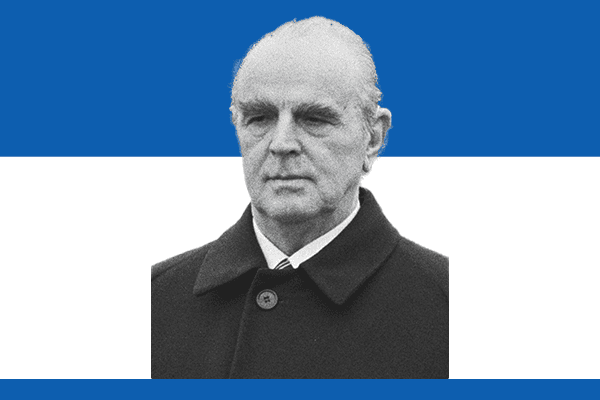
Early Life and Education
Konstantinos Karamanlis was born on March 8, 1907, in Proti, a village in northern Greece. He grew up in a politically aware family, which influenced his early interest in public affairs. He studied law at the University of Athens and quickly developed a strong understanding of legal and political systems.
Rather than remaining limited to academic life, he actively entered politics at a young age. In 1935, he won election to the Greek Parliament, marking the beginning of a long and impactful political career.
Rise in Politics
Karamanlis steadily built his reputation as a capable and determined leader. He held several ministerial positions and gained recognition for his administrative skills. In 1955, he became Prime Minister of Greece and immediately began implementing reforms to modernize the country.
He focused on economic development, infrastructure, and industrial growth. Instead of maintaining traditional systems, he introduced policies that improved transportation, boosted investment, and strengthened Greece’s economy. His leadership helped transform Greece into a more modern European state.
Exile and Return
Political tensions and instability forced Karamanlis to leave Greece in 1963. He lived in self-imposed exile in Paris during a turbulent period that included military rule in Greece. Despite his absence, his influence remained strong.
In 1974, following the collapse of the military junta, Karamanlis returned to Greece and took charge of the government. He actively led the transition from dictatorship to democracy, a period known as the “Metapolitefsi.” He restored democratic institutions, legalized political parties, and ensured free elections.
Role in European Integration
Karamanlis strongly believed in Greece’s future within Europe. He actively pursued membership in the European Economic Community (now the European Union). His efforts succeeded when Greece officially joined the EEC in 1981.
Through this achievement, he strengthened Greece’s political and economic ties with Europe. He viewed European integration as essential for stability, growth, and international cooperation.
Presidency and Later Life
After serving as Prime Minister, Karamanlis became President of Greece in 1980. In this role, he continued to promote national unity and democratic values. He served two terms as president, maintaining a strong moral authority in Greek politics.
Rather than withdrawing from public life, he remained an influential figure and a symbol of stability. His leadership style emphasized responsibility, vision, and dedication to national progress.
Legacy and Impact
Konstantinos Karamanlis left a lasting legacy in Greece. He successfully guided the country through political crises and laid the foundation for modern democratic governance. His commitment to reform, development, and European integration transformed Greece’s position on the global stage.
He did not simply react to events; he actively shaped them. His decisions influenced generations of political leaders and citizens. Today, many consider him the architect of modern Greece.
Conclusion
Konstantinos Karamanlis remains a towering figure in Greek history. Through active leadership and decisive action, he restored democracy, strengthened the economy, and secured Greece’s place in Europe. His legacy continues to inspire and define the nation’s political identity.