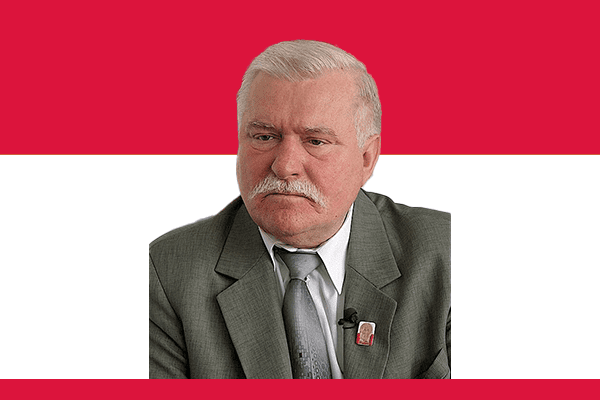
Early Life and Background
Lech Wałęsa was born on September 29, 1943, in Popowo, Poland, during the difficult years of World War II. He came from a humble working-class family and understood hardship from an early age. After completing his education, he trained as an electrician and later worked at the Lenin Shipyard in Gdańsk. His experience as a worker shaped his political beliefs and gave him a strong connection with ordinary Polish citizens.
In the 1970s, Wałęsa became involved in labor activism. He spoke out against poor working conditions and unfair treatment of workers under the communist government. Because of his activism, authorities dismissed him from his job, but he did not give up. Instead, he continued to organize and inspire workers across Poland.
Rise of Solidarity
Lech Wałęsa rose to international fame in 1980 when he led a major strike at the Gdańsk Shipyard. Workers demanded better wages, improved rights, and greater freedom. Under his leadership, the strike remained disciplined and peaceful. This movement led to the creation of Solidarity (Solidarność), the first independent labor union allowed in the Soviet bloc.
Solidarity quickly grew into a powerful social and political force. Millions of Poles joined the movement, seeing it as a symbol of hope and resistance. Wałęsa became the face of the struggle for freedom in Poland. Even when the government imposed martial law in 1981 and tried to crush the movement, he continued to inspire people. Although authorities detained him, they could not silence the growing desire for democracy.
International Recognition and Nobel Prize
Lech Wałęsa’s leadership attracted worldwide attention. He became a symbol of peaceful resistance against oppression. In 1983, he received the Nobel Peace Prize for his non-violent efforts to secure workers’ rights and political freedom in Poland. This award recognized not only his personal courage but also the broader struggle of the Polish people.
His international reputation increased pressure on the communist government. Western countries and democratic leaders praised his efforts, while people living under communist regimes saw him as a source of inspiration. Wałęsa proved that change could come through unity, courage, and peaceful action.
Presidency of Poland
In 1989, the communist government and opposition leaders held the historic Round Table Talks. These negotiations opened the way for semi-free elections, which Solidarity won overwhelmingly. As Poland moved toward democracy, Wałęsa became one of the nation’s central leaders.
In 1990, Lech Wałęsa won the presidential election and became the first democratically elected President of Poland in the post-communist era. During his presidency, he oversaw major reforms that transformed Poland’s political and economic systems. He supported the shift from a centrally planned economy to a market-based system and encouraged democratic institutions to grow stronger.
Although his presidency faced criticism and political challenges, Wałęsa remained a powerful national symbol. He worked to strengthen Poland’s independence and reconnect the country with Western Europe after decades of Soviet influence.
Legacy
Lech Wałęsa remains one of the most influential leaders in European history. He helped bring down communist rule in Poland and contributed to the broader collapse of communism in Eastern Europe. His leadership in Solidarity changed the course of the Cold War and encouraged peaceful democratic reform across the region.