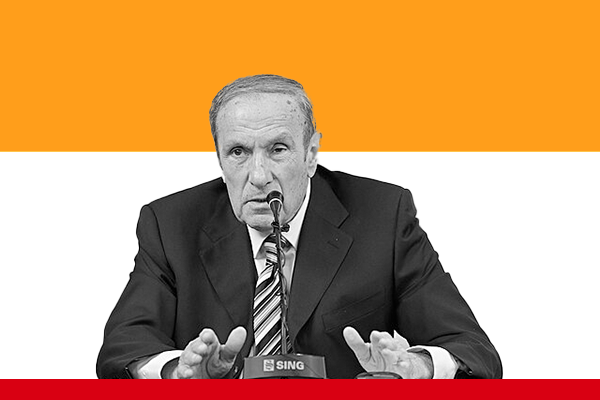
Early Life and Education
Levon Ter-Petrosyan was born on January 9, 1945, in Aleppo, Syria, to an Armenian family. His family later moved to Armenia in 1946 as part of a repatriation program. He grew up in Yerevan, the capital city, where he received his education. He studied at Yerevan State University and specialized in Oriental Studies. Later, he continued his academic work in Leningrad (now Saint Petersburg).
Before entering politics, Ter-Petrosyan was a respected scholar. He worked at the Institute of Ancient Manuscripts, also known as the Matenadaran, and published research on Armenian history and literature. His academic background helped him develop strong analytical and leadership skills.
Role in Armenia’s Independence Movement
Ter-Petrosyan entered politics in the late 1980s during the rise of Armenian nationalism. He became one of the leaders of the Armenian National Movement, which demanded independence and democratic reforms.
In 1990, he was elected Chairman of the Armenian Supreme Council, making him the head of the republic. Under his leadership, Armenia declared independence from the Soviet Union in 1991. Later that year, he was elected as Armenia’s first President in a national election.
His leadership marked the beginning of a new era in Armenian history.
Presidency and Major Challenges
As President, Ter-Petrosyan faced many serious challenges. Armenia was dealing with economic collapse, energy shortages, and political instability. One of the biggest issues was the conflict over Nagorno‑Karabakh, a region disputed between Armenia and Azerbaijan.
During his presidency, Armenia supported ethnic Armenians in Nagorno-Karabakh, and a war took place. By 1994, a ceasefire was signed, and Armenian forces gained control of the region and surrounding territories. This was seen as a military success but created long-term political tensions.
At the same time, Armenia faced economic blockades from neighboring countries, which made development difficult. Ter-Petrosyan introduced economic reforms to move Armenia toward a market economy.
Resignation from Office
Despite his achievements, Ter-Petrosyan’s presidency ended in controversy. In 1997, he supported a peace plan to resolve the Nagorno-Karabakh conflict. However, many Armenian political leaders and military officials opposed his approach.
Due to strong internal opposition, Ter-Petrosyan resigned on February 3, 1998. His resignation showed the deep political divisions within Armenia.
Later Political Career and Legacy
After resigning, Ter-Petrosyan stayed away from politics for several years. However, he returned in 2007 and became an opposition leader. He ran for president in 2008 but lost the election.
Levon Ter-Petrosyan’s legacy remains mixed. Supporters praise him as the founding father of modern Armenia who led the country to independence and victory in war. Critics argue that his policies caused economic hardship and political conflict.
However, there is no doubt that he played a crucial role in shaping Armenia’s modern history. His leadership helped Armenia become an independent nation and survive its difficult early years.