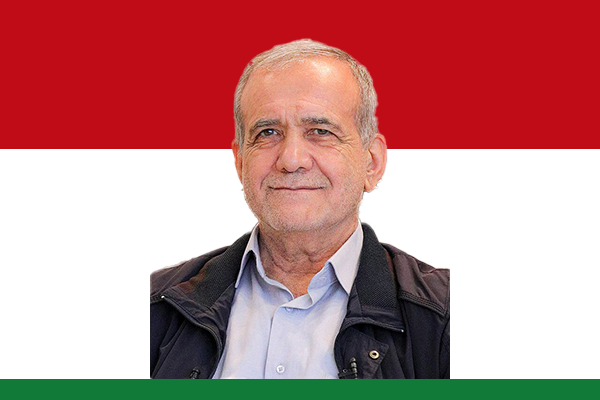
President Masoud Pezeshkian: Profile & Political Path
Born on September 29, 1954, in Mahabad in northwestern Iran, Masoud Pezeshkian trained as a medical doctor and specialized as a heart surgeon. He later served as the head of the University of Medical Sciences in Tabriz.
During the Iran–Iraq War (1980–1988), he worked as a physician, treating soldiers on the front lines.
Pezeshkian entered politics through the health sector: he was first appointed Deputy Health Minister and then served as Minister of Health and Medical Education between 2001 and 2005 under reformist president Mohammad Khatami.
After his ministerial stint, he shifted into electoral politics, winning a parliamentary seat representing the Tabriz-Osku-Azar Shahr district in 2008, and subsequently re-elected multiple times until 2024. During part of his parliamentary tenure (2016–2020), he served as First Deputy Speaker of the parliament.
Rise to the Presidency
Pezeshkian made two previous bids for the presidency — in 2013 (from which he withdrew) and in 2021 (when he was rejected by the vetting authority).
His successful run came in 2024, following the unexpected death of the then-president. In the July 2024 runoff election, he secured a decisive victory — winning about 53.7% of the vote.
On July 28, 2024, he was formally endorsed by the country’s supreme leader and sworn in as the 9th president of Iran.
Pezeshkian’s ascent marked the return of a “reform-minded” figure to the presidency after nearly two decades, prompting expectations — both domestic and international — of a potential shift toward moderation and openness.
The National
Presidency: Priorities & Political Stance
As president, Pezeshkian has positioned himself as a moderate and reform-oriented leader, while simultaneously projecting continuity with Iran’s established structures.
Domestically, he is seen as more tolerant of dissent than many predecessors: during his time in parliament, he condemned state violence following protests sparked by the death of Mahsa Amini in 2022 — criticizing harsh law-enforcement measures and the forced hijab crackdown.
On foreign policy, while offering a more constructive tone, Pezeshkian has emphasised cautious pragmatism rather than radical transformation. Analysts expect his administration to attempt economic reforms and perhaps seek new openings with the West — though any major shift likely remains constrained by conservative institutions and the ultimate influence of the Supreme Leader.