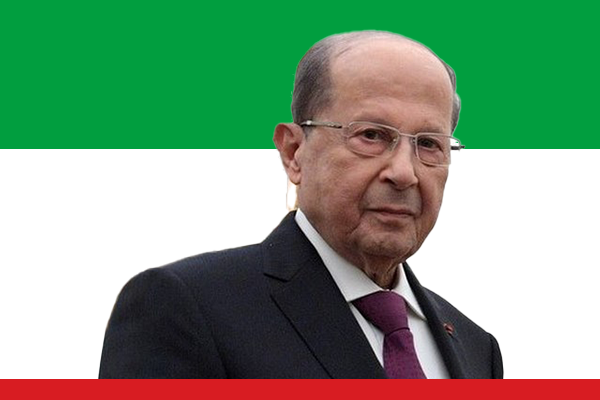
Early Life and Military Career
Michel Naim Aoun was born on February 18, 1935, in Haret Hreik, a suburb of Beirut, Lebanon. He pursued a military career at an early age and graduated from the Lebanese Military Academy in 1955 as an artillery officer. Over the years, he received additional training in France and steadily rose through the ranks of the Lebanese Armed Forces.
During the Lebanese Civil War (1975–1990), Aoun emerged as a key military leader. In 1984, he was appointed Commander of the Lebanese Army. At a time when Lebanon was deeply divided by sectarian conflict and foreign interventions, Aoun sought to strengthen the national army and restore state authority.
Interim Prime Minister and “War of Liberation”
In 1988, outgoing President Amine Gemayel appointed Michel Aoun as head of an interim military government after political leaders failed to agree on a successor. This decision led to a divided government, as rival factions refused to recognize his authority. Aoun launched what he called the “War of Liberation” against Syrian military presence in Lebanon in 1989, aiming to restore full sovereignty.
However, his campaign faced strong opposition both domestically and internationally. In October 1990, Syrian forces, with international backing, launched a military offensive against his stronghold in Baabda. Aoun sought refuge in the French embassy and later went into exile in France, marking the end of his military-led government.
Exile and Political Comeback
Michel Aoun spent 15 years in exile in France, where he remained politically active and continued to advocate for Syrian withdrawal from Lebanon. His exile ended in 2005 after the Cedar Revolution, a mass protest movement that followed the assassination of former Prime Minister Rafik Hariri. The protests led to the withdrawal of Syrian troops from Lebanon.
Upon returning to Lebanon, Aoun founded and led the Free Patriotic Movement (FPM), a major Christian political party. The FPM quickly became a powerful political force. In 2006, Aoun signed a memorandum of understanding with Hezbollah, a significant Shiite political and military organization. This alliance reshaped Lebanon’s political alliances and strengthened his position in national politics.
Presidency (2016–2022)
After more than two years of political deadlock and a vacant presidency, Michel Aoun was elected President of Lebanon on October 31, 2016. His election came as part of a political compromise among major factions. As president, he pledged to fight corruption, strengthen state institutions, and improve economic conditions.
However, his presidency faced severe challenges. Lebanon experienced a deep financial and economic crisis beginning in 2019, leading to widespread protests against political elites. Many citizens accused the ruling class, including Aoun’s allies, of corruption and mismanagement. The situation worsened with the Beirut port explosion in August 2020, which caused massive destruction and loss of life. The tragedy intensified public anger and demands for reform.
Throughout his term, Aoun defended his policies and emphasized the need for political stability. Supporters viewed him as a leader who stood firm in protecting Christian political representation and national sovereignty, while critics argued that his alliances and governance contributed to Lebanon’s political paralysis.
Legacy and Conclusion
Michel Aoun’s political career spans more than four decades, marked by military leadership, exile, political resilience, and eventual presidency. He remains a deeply polarizing figure in Lebanese history. For some, he symbolizes determination and resistance against foreign influence; for others, he represents the shortcomings of Lebanon’s sectarian political system.
Despite differing opinions, there is no doubt that President Michel Aoun played a central role in Lebanon’s contemporary political narrative. His leadership, decisions, and alliances significantly influenced the direction of the country during critical periods of change and crisis.