Mr. Nilo Peçanha
In Office: 14 June 1909 – 15 November 1910
Political Party: Fluminense Republican Party
Home State: Campos dos Goytacazes
Lifespan: 1867–1924
Country: Brazil
Image credits available here.
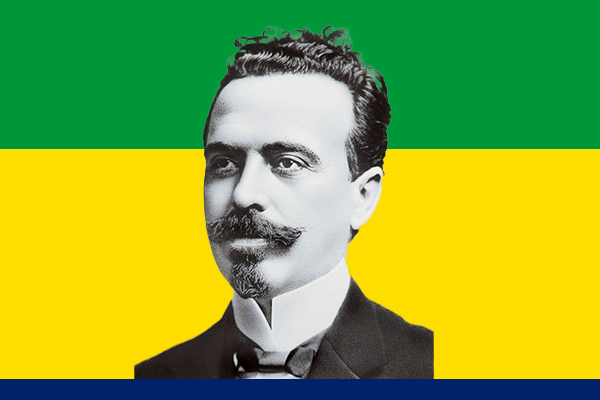
Early Life and Political Rise
Nilo Peçanha was born on October 2, 1867, in Campos dos Goytacazes, Rio de Janeiro. Coming from a modest background, he worked hard to obtain an education, studying law at the Faculty of Law in Recife. His dedication and intellect drew public attention early in his career. As a young man, Peçanha actively participated in political discussions that shaped the transition from the Brazilian Empire to the Republic.
He joined the Republican movement with strong conviction, believing in equality and merit. His leadership qualities quickly became evident, and he rose through political ranks with determination. As a state representative and later as a federal deputy, Peçanha advocated modernization and education reforms that aimed to uplift underprivileged communities. His eloquence and sense of justice earned him wide respect among colleagues.
Governorship and National Leadership
In 1903, Nilo Peçanha became the Governor of Rio de Janeiro State. He actively implemented education and infrastructure reforms, establishing technical schools to provide professional training for Brazil’s growing workforce. He believed that education could serve as the foundation for social mobility and national progress. Under his leadership, the state built new public schools and improved transportation networks, encouraging regional development.
When President Afonso Pena passed away in 1909, Nilo Peçanha, who served as Vice President, assumed the presidency. At 41, he became Brazil’s first president of Afro-Brazilian descent, marking a significant milestone in the nation’s history. His presidency lasted from 1909 to 1910, yet his influence extended far beyond his short term. Peçanha governed with a sense of balance, focusing on unity and administrative efficiency.
Reforms and Educational Initiatives
As president, Peçanha prioritized education as a tool for empowerment. He expanded the network of technical and vocational schools, giving Brazil’s working class greater opportunities for advancement. He encouraged the creation of institutions that trained skilled workers in agriculture, industry, and commerce, ensuring that Brazil could compete in an increasingly industrialized world.
Peçanha also promoted social inclusion by appointing qualified individuals from diverse backgrounds to key government positions. His actions reflected his belief that ability, not race or class, should determine leadership. This progressive stance distinguished him from many of his contemporaries and helped strengthen Brazil’s identity as a modern republic.
He also worked to stabilize relations among Brazil’s states, reducing political tensions and promoting cooperative development. His policies fostered better communication between regional leaders and the federal government, ensuring smoother governance during a time of transition.
Legacy and Later Career
After leaving the presidency, Nilo Peçanha continued to serve Brazil through various political roles. He returned to the Senate, where he continued advocating education reforms and policies aimed at reducing inequality. His emphasis on professional education later inspired national initiatives, shaping Brazil’s educational system for decades.
In 1921, Peçanha ran again for president, representing the Reação Republicana movement. Although he lost to Artur Bernardes, his campaign reignited debate about modernization, race, and opportunity in Brazilian politics. Until his death in 1924, Peçanha remained a respected statesman, remembered for his integrity and progressive ideas.
Conclusion
President Nilo Peçanha stands as one of Brazil’s most visionary leaders. His commitment to education, equality, and social progress reflected his belief in a modern, inclusive nation. By actively promoting technical education and merit-based governance, he laid the foundation for future generations to thrive.
Though his presidency was brief, his impact endured through the institutions he built and the ideals he championed. Nilo Peçanha’s leadership demonstrated that true national progress arises from opportunity, education, and unity — values that continue to inspire Brazil today.