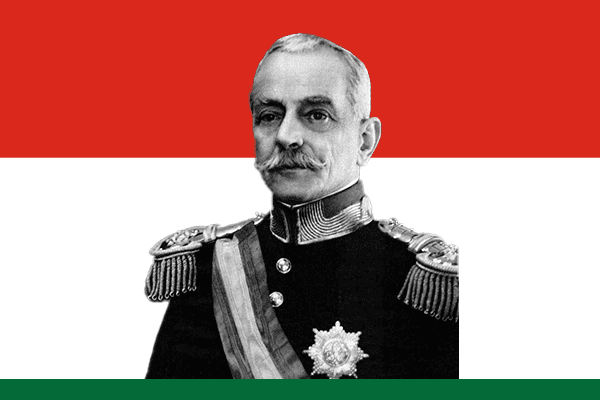
Early Life and Military Career
António Óscar de Fragoso Carmona was born on November 24, 1869, in Lisbon, Portugal. He pursued a military career from a young age and trained at the Portuguese Military Academy. Instead of remaining in a purely academic environment, he actively developed his skills as an officer and rose steadily through the ranks.
He participated in various military assignments that strengthened his leadership abilities and discipline. His commitment to service and order shaped his worldview and later influenced his political actions. Over time, he gained recognition as a capable and reliable military leader.
Rise to Power
Portugal experienced significant political instability during the early 20th century, particularly under the First Republic. Carmona did not remain passive during this period. In 1926, he actively supported and participated in the military coup known as the 28 May 1926 coup d’état, which overthrew the existing republican government.
Following the coup, Carmona quickly rose to prominence within the new regime. He first served as Minister of War and later became Prime Minister. His decisive actions and leadership abilities earned him widespread support among conservative and military factions.
Presidency
In 1926, Carmona assumed the presidency of Portugal, and in 1928, the public formally elected him to the position. He did not merely hold the office symbolically; instead, he actively influenced the direction of the government. His presidency marked the transition from military dictatorship to a more structured authoritarian regime.
Carmona worked closely with António de Oliveira Salazar, who became Prime Minister in 1932. While Salazar handled much of the administrative and economic policy, Carmona maintained the role of head of state and ensured stability within the political system.
Role in the Estado Novo
Under Carmona’s presidency, Portugal entered the Estado Novo period, an authoritarian regime that emphasized order, nationalism, and conservative values. Carmona supported this system and helped legitimize it through his leadership.
Rather than stepping back, he actively endorsed policies that aimed to maintain stability and control. Although Salazar held significant power, Carmona’s presence provided continuity and institutional authority. He ensured that the government operated smoothly and retained public confidence among supporters of the regime.
Leadership Style and Challenges
Carmona demonstrated a disciplined and pragmatic leadership style shaped by his military background. He valued order, hierarchy, and national unity. However, his presidency also faced criticism due to the authoritarian nature of the regime and restrictions on political freedoms.
Despite these challenges, Carmona maintained his position for over two decades. He navigated political pressures and supported policies that he believed would preserve stability. His long tenure reflected both his resilience and the controlled political environment of the time.
Legacy and Significance
Óscar Carmona’s legacy remains closely tied to the establishment and استمرار (continuation) of the Estado Novo regime. He played a crucial role in ending the instability of the First Republic and creating a more centralized system of governance.
Historians often debate his impact, with some recognizing his role in stabilizing Portugal, while others criticize his association with authoritarian rule. Regardless of perspective, Carmona significantly influenced Portugal’s political development during the 20th century.
Conclusion
Óscar Carmona remains an important historical figure who shaped modern Portugal through active leadership and military influence. He guided the country through a period of uncertainty and helped establish a long-lasting political system. His presidency continues to be studied as a key chapter in Portugal’s history.