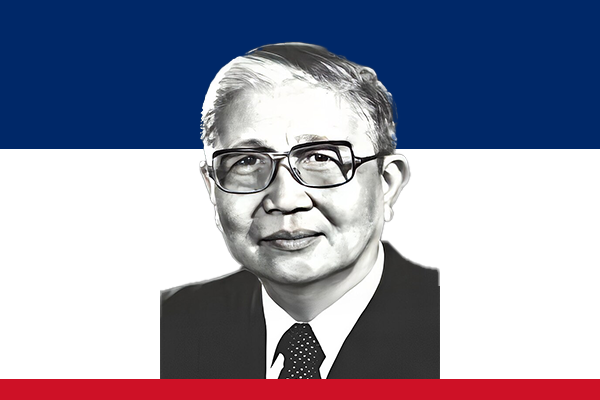
Mr. Phoumi Vongvichit
In Office: 29 October 1986 – 15 August 1991
Political Party: Lao Front for National Development
Home State: Xiangkhouang
Lifespan: 1909–1994
Country: Laos
Image credits available here.
Early Life and Education
Phoumi Vongvichit was one of the most influential revolutionary leaders in the modern history of Laos. He was born in the early 20th century in southern Laos, during a period when the country was under French colonial rule. From a young age, he showed strong intellectual ability and an interest in politics and social change. He pursued higher education in law and political thought, which helped him understand colonial systems, governance, and the importance of national sovereignty. His education played a key role in shaping his revolutionary ideology and his commitment to independence and socialism.
Entry into the Independence Movement
During the 1940s, Phoumi Vongvichit actively joined the Lao Issara (Free Laos) movement, which sought to end French colonial domination. He became deeply involved in organizing resistance activities and mobilizing public support for independence. After the failure of early independence efforts and the return of French control, he continued his struggle through political and revolutionary means. His determination during this challenging phase earned him respect among nationalist leaders and revolutionaries.
Role in the Pathet Lao Movement
Phoumi Vongvichit later emerged as a prominent leader within the Pathet Lao, the communist political movement that aimed to establish a socialist state in Laos. He played a vital role in developing the ideological foundation of the movement and strengthening its political structure. Unlike some leaders who focused mainly on military strategy, Phoumi emphasized political education, unity, and long-term nation-building. His calm leadership style and intellectual approach helped consolidate support among party cadres and the general population.
Contribution to the Lao People’s Revolutionary Party
As a senior member of the Lao People’s Revolutionary Party (LPRP), Phoumi Vongvichit contributed significantly to shaping party policies and governance principles. He strongly believed in collective leadership, discipline, and ideological clarity. His work helped transform the party from a revolutionary organization into a governing political force. He also played an important role in drafting policies related to education, culture, and social transformation, which were considered essential for building a socialist society.
Presidency of Laos
Phoumi Vongvichit served as President of Laos during a crucial period in the country’s post-revolutionary history. His presidency symbolized continuity, stability, and ideological commitment after years of conflict. Although executive power largely rested with the party leadership, the presidency carried immense moral and symbolic authority. Phoumi used his position to promote national unity, socialist values, and respect for revolutionary sacrifices. He represented Laos in official state functions and embodied the legitimacy of the new political system.
Leadership Style and Political Philosophy
Phoumi Vongvichit was known for his modest lifestyle, disciplined character, and intellectual depth. He believed that leaders should serve the people rather than seek personal power. His political philosophy emphasized equality, national independence, and social justice. He strongly supported education as a tool for empowerment and national development. Even during times of hardship, he advocated patience, ideological commitment, and collective effort to overcome challenges.
Legacy and Historical Significance
Phoumi Vongvichit remains a respected figure in Lao history as a revolutionary intellectual, party leader, and president. His contributions helped shape the political identity of modern Laos and ensured continuity during the transition from conflict to governance. He is remembered not only for holding high office but also for his lifelong dedication to national independence and socialist principles. His legacy continues to influence Lao political culture and revolutionary memory.
Conclusion
President Phoumi Vongvichit played a decisive role in Laos’s struggle for independence, socialist transformation, and political stability. Through his intellectual leadership, revolutionary commitment, and symbolic presidency, he left a lasting mark on the nation’s history. His life reflects the challenges and aspirations of Laos during the 20th century and stands as an example of principled political leadership.