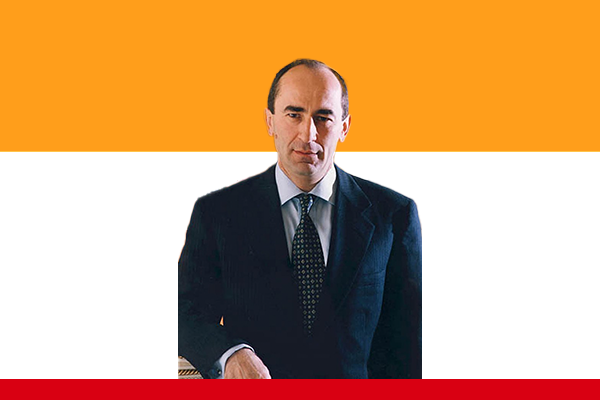
Mr. Robert Kocharyan
In Office: 9 April 1998 – 9 April 2008
Political Party: Independent
Home State: Stepanakert
Lifespan: born 1954
Country: Armenia
Image credits available here.
Early Life and Education
Robert Kocharyan was born on August 31, 1954, in Stepanakert, a city in the disputed region of Nagorno‑Karabakh. At that time, the region was part of Soviet Azerbaijan. He grew up in a middle-class family and received his early education locally. Kocharyan later attended Yerevan Polytechnic Institute, where he studied engineering.
During his youth, he was active in student and social activities, which helped him develop leadership skills. His early career was connected with technical and industrial work, but political developments in the late Soviet period changed his life direction.
Role in Nagorno-Karabakh Movement
Kocharyan became politically active in the late 1980s during the Nagorno-Karabakh movement. This was a period when Armenians in Nagorno-Karabakh demanded unification with Armenia. He became one of the key leaders of the movement and played an important role in organizing political efforts.
When conflict broke out between Armenia and Azerbaijan, Kocharyan became a major political figure in Nagorno-Karabakh. He served as the leader and later as President of the self-declared Nagorno-Karabakh Republic. His leadership during the war made him popular among many Armenians.
Rise to Presidency of Armenia
In 1997, Kocharyan was appointed Prime Minister of Armenia. Soon after, in 1998, President Levon Ter‑Petrosyan resigned. Kocharyan ran in the presidential election and won, becoming President of Armenia in 1998.
He was re-elected in 2003 for a second term. His presidency lasted until 2008.
Achievements as President
One of Kocharyan’s major achievements was improving Armenia’s economy. During his presidency, Armenia experienced strong economic growth. Industries developed, foreign investment increased, and living standards improved for many citizens.
He also strengthened Armenia’s military and national security. His government worked to maintain Armenia’s position in the Nagorno-Karabakh conflict.
Kocharyan built close relations with Russia, which became Armenia’s main political and military partner. At the same time, he tried to maintain relations with Western countries.
Infrastructure development was another achievement. Roads, energy systems, and public services improved during his presidency.
Controversies and Criticism
Despite his achievements, Kocharyan’s presidency was also controversial. He was criticized for limiting political freedom and suppressing opposition protests.
The most serious controversy happened after the 2008 presidential election. Mass protests took place in Yerevan, and violence broke out between protesters and security forces. Several people were killed. This event damaged his reputation and led to long-term political debate.
Years later, Kocharyan faced legal charges related to those events, but he denied wrongdoing and said his actions were necessary to maintain order.
Life After Presidency and Legacy
After leaving office in 2008, Kocharyan remained involved in politics. He continued to influence political discussions and later returned as an opposition leader.
His legacy remains mixed. Supporters say he was a strong leader who brought stability and economic growth. Critics argue that his rule weakened democracy.
However, there is no doubt that Robert Kocharyan played a major role in Armenia’s history. He helped lead the country during a difficult period of transition and conflict.
Conclusion
President Robert Kocharyan remains one of the most significant figures in Armenian politics. His leadership shaped Armenia’s economy, security, and political system. Whether seen as a national hero or a controversial leader, his impact on Armenia is lasting and important.