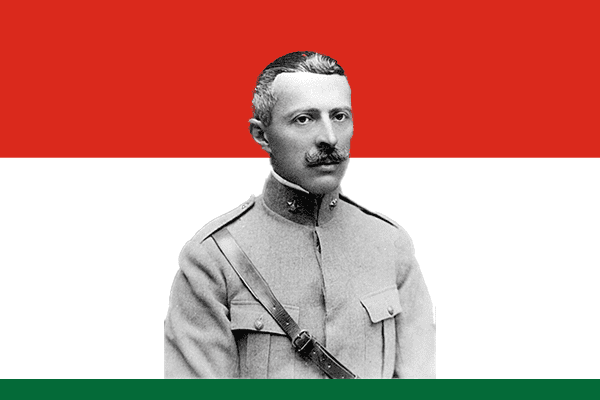
Early Life and Education
Sidónio Pais was born on May 1, 1872, in Caminha, Portugal. He pursued higher education at the University of Coimbra, where he studied mathematics and developed a strong academic foundation. Rather than limiting himself to academic life, he actively engaged in public service and military affairs.
He served as a professor of mathematics and later joined the Portuguese Army as an artillery officer. His dual career in academia and the military helped him develop discipline, analytical thinking, and leadership skills. These qualities later influenced his approach to politics and governance.
Political Rise
Pais entered politics during the early years of the Portuguese Republic, which was established after the fall of the monarchy in 1910. He became actively involved in government and served as Minister of Finance. In this role, he implemented financial reforms and worked to stabilize the economy.
Later, he served as Portugal’s ambassador to Germany, where he gained diplomatic experience and broadened his international perspective. Instead of remaining a passive observer, he actively contributed to political discourse and built a reputation as a decisive leader.
Seizure of Power
In 1917, Sidónio Pais led a military coup that overthrew the existing republican government. He justified his actions by arguing that political instability and ineffective governance had weakened the nation. After taking control, he established a new political system often referred to as the “New Republic.”
He did not rule from the background; instead, he actively centralized power and introduced constitutional changes. In 1918, he became President of Portugal through a direct election, a significant departure from previous practices. His leadership style combined authoritarian control with populist appeal, as he sought to connect directly with the people.
Presidency and Policies
As president, Pais implemented several reforms aimed at strengthening national unity and governance. He restructured political institutions, adjusted electoral laws, and sought to balance competing political factions. He also worked to improve relations between the state and the Catholic Church, which had been strained since the establishment of the republic.
Pais actively promoted nationalism and attempted to create a sense of stability in a divided society. He engaged with citizens, delivered public speeches, and positioned himself as a unifying figure. However, his concentration of power and authoritarian tendencies drew criticism from opponents.
Challenges and Assassination
Despite his efforts, Sidónio Pais faced significant opposition. Political divisions, economic difficulties, and social unrest continued to challenge his leadership. Critics argued that his शासन style limited democratic freedoms and increased tensions within the country.
On December 14, 1918, Pais was assassinated at a railway station in Lisbon. His death shocked the nation and marked a turning point in Portuguese politics. The instability he had tried to resolve persisted after his assassination, highlighting the complexity of the issues he confronted.
Legacy
Sidónio Pais remains a controversial figure in Portuguese history. Some view him as a strong leader who attempted to restore order during chaos, while others criticize his authoritarian approach. He actively reshaped the political landscape, even though his reforms did not achieve lasting stability.
His presidency demonstrated both the potential and risks of concentrated power. By taking decisive action, he left a lasting impact on Portugal’s political development.
Conclusion
Sidónio Pais played a crucial role in shaping early republican Portugal. Through active leadership, he sought to address instability and redefine governance. Although his tenure ended abruptly, his influence continues to be studied and debated in modern history.