Mr. Sooronbay Jeenbekov
In Office: 24 November 2017 – 15 October 2020
Political Party: Social Democratic Party
Home State: Bishkek
Lifespan: born – 1958
Country: Kyrgyzstan
Image credits available here.
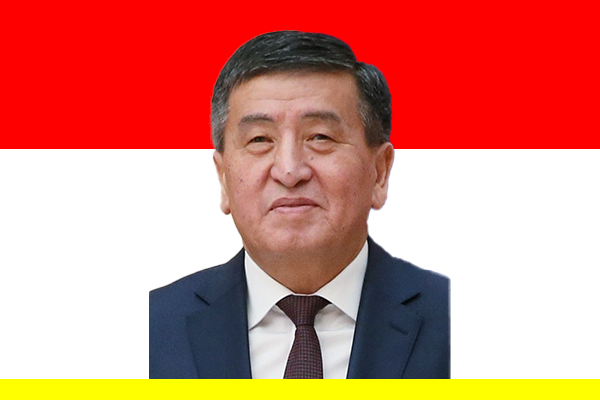
Early Life and Political Background
Sooronbay Jeenbekov was born on 16 November 1958 in the Osh Region of southern Kyrgyzstan. He was trained as an agricultural specialist and began his professional career in the agrarian sector. His early experience in local administration helped shape his practical understanding of rural development and regional governance, which later influenced his political approach.
Jeenbekov gradually entered public service, holding positions in regional administration and government bodies. His reputation as a disciplined and reliable administrator helped him gain recognition within national politics.
Appointment as Prime Minister
Jeenbekov was appointed Prime Minister of Kyrgyzstan in 2012, during the presidency of Almazbek Atambayev. His appointment came at a time when Kyrgyzstan was consolidating its parliamentary system following years of political unrest. As prime minister, Jeenbekov was tasked with ensuring continuity, stability, and effective coordination between the executive and legislative branches of government.
His leadership emphasized institutional discipline, collective decision-making, and adherence to constitutional norms, which were essential for maintaining confidence in the political system.
Policies and Governance
During his time as prime minister, Jeenbekov focused on improving public administration, strengthening state institutions, and ensuring the smooth functioning of government ministries. He supported policies aimed at economic stabilization, infrastructure development, and social welfare, particularly in education and healthcare.
Agriculture, being close to his professional background, received attention through initiatives designed to support farmers, improve productivity, and enhance rural livelihoods. His government also worked on improving regional development to reduce economic disparities between northern and southern Kyrgyzstan.
Political Stability and Challenges
Jeenbekov’s tenure coincided with a relatively stable period in Kyrgyz politics compared to earlier years. However, challenges remained, including economic dependence on remittances, unemployment, and public expectations for improved living standards. His government had to balance reform initiatives with political realities in a diverse and sometimes fragmented parliament.
Despite criticism from opposition groups who called for faster reforms, Jeenbekov was generally seen as a stabilizing figure who avoided confrontational politics.
Transition from Prime Ministerial Role
In 2017, Sooronbay Jeenbekov resigned from his position as prime minister to contest the presidential election. His experience as head of government significantly strengthened his political credentials and public profile. He went on to win the presidency later that year, marking a peaceful transfer of power, which was a notable moment in Kyrgyzstan’s democratic development.
Legacy as Prime Minister
Sooronbay Jeenbekov’s period as prime minister is remembered for its emphasis on continuity, administrative order, and political moderation. While not associated with dramatic reforms, his leadership contributed to maintaining governmental stability during an important phase in Kyrgyzstan’s political evolution. His prime ministerial experience laid the foundation for his later role as president and remains a significant chapter in the country’s modern political history.