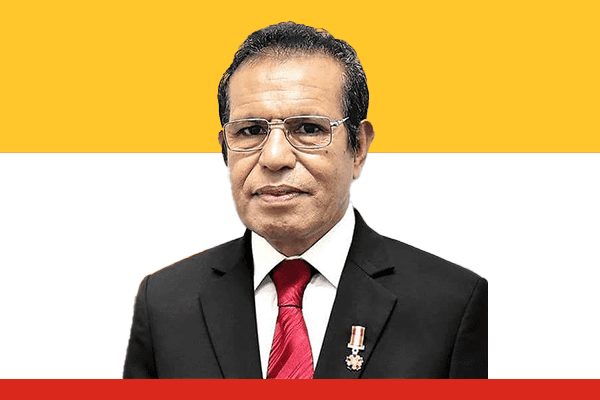
Mr. Taur Matan Ruak
In Office: 20 May 2012 – 20 May 2017
Political Party: Independent
Home State: Dili
Lifespan: born 1956
Country: Timor-Leste
Image credits available here.
Early Life and Resistance Movement
Taur Matan Ruak grew up during a period of political instability. After Portugal began withdrawing from its colonies in the mid-1970s, East Timor declared independence in 1975. However, it was soon invaded by Indonesia, leading to decades of armed conflict. During this time, Taur Matan Ruak joined the armed resistance movement known as FALINTIL (Forças Armadas de Libertação Nacional de Timor-Leste).
He quickly rose through the ranks because of his discipline, courage, and strategic ability. In 1998, he became the commander-in-chief of FALINTIL. Under his leadership, the resistance movement maintained unity and morale during one of the most difficult periods in the struggle. His command played a vital role in protecting civilians and sustaining the push for independence, which culminated in the 1999 referendum where the people voted overwhelmingly for freedom.
Transition to National Leadership
Following the referendum and the eventual restoration of independence in 2002, Taur Matan Ruak helped transform FALINTIL into the new national defense force of East Timor, known as the F-FDTL (Falintil-Forças de Defesa de Timor-Leste). He served as the first commander of the new military, ensuring stability during the fragile early years of nation-building.
In 2012, Taur Matan Ruak entered formal politics and was elected as the President of East Timor. He succeeded José Ramos-Horta, another key independence leader and Nobel Peace Prize laureate. As President (2012–2017), Taur Matan Ruak focused on strengthening democratic institutions, promoting national unity, and addressing social challenges such as poverty and unemployment. He emphasized reconciliation among political factions and worked to maintain peace in a country still healing from years of conflict.
Premiership and Political Vision
After completing his presidential term, Taur Matan Ruak continued his political journey. In 2018, he became Prime Minister of East Timor. His administration concentrated on economic diversification, infrastructure development, and improving public services. He advocated reducing dependency on oil revenues and strengthening agriculture, education, and youth employment opportunities.
His leadership style is often described as firm and principled. Coming from a military background, he values discipline and national sovereignty, yet he also supports democratic dialogue and constitutional governance. He has consistently called for transparency and anti-corruption measures, understanding that strong institutions are essential for long-term stability.
Legacy and Significance
Taur Matan Ruak remains one of the most respected figures in East Timorese politics. His life reflects the transformation of East Timor itself—from a colonized territory and conflict zone to a functioning democratic state. Many citizens view him as a symbol of resilience and patriotism.
His contributions are not limited to military leadership; they extend to political institution-building and national development. Through decades of service, he has helped shape the identity of the world’s youngest Asian democracy. His journey from guerrilla commander to President and Prime Minister illustrates dedication to public service and national independence.