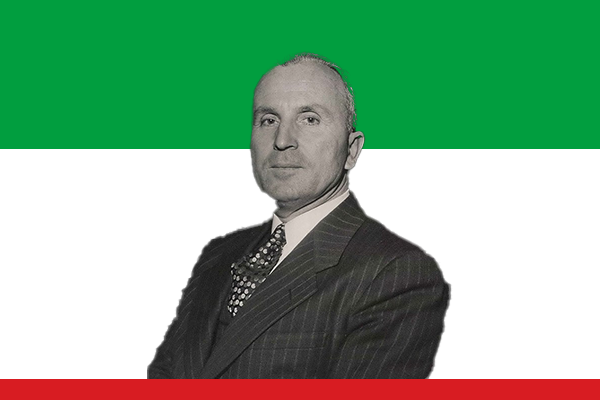
Abdallah El-Yafi was a prominent Lebanese political leader who served multiple terms as Prime Minister of Lebanon during the mid-20th century. Known for his integrity, strong administrative skills, and dedication to constitutional governance, El-Yafi played a significant role in shaping Lebanon’s early years after independence. His political career reflected his commitment to democracy, reform, and national unity during a period marked by regional tensions and internal political challenges.
Born in 1901 in Beirut, Abdallah El-Yafi pursued higher education in law and earned a doctorate from the Sorbonne University in Paris. His advanced education helped shape his intellectual approach to politics and governance. Upon returning to Lebanon, he began practicing law and quickly became involved in public life. His legal background and eloquence made him a respected figure in Lebanese political circles.
El-Yafi first rose to national prominence in the 1930s and 1940s when Lebanon was still under French Mandate. During this time, he advocated strongly for independence and greater national sovereignty. After Lebanon gained independence in 1943, El-Yafi continued to play an important role in the newly formed government. Over the course of his career, he served as Prime Minister several times between 1938 and 1969, reflecting the trust placed in him by political leaders and the public.
One of the defining features of Abdallah El-Yafi’s leadership was his emphasis on constitutional rule and institutional reform. He believed that strong institutions were essential for maintaining Lebanon’s delicate political balance. Lebanon’s political system, based on power-sharing among religious communities, required careful negotiation and cooperation. El-Yafi worked within this framework to promote stability and ensure that governance remained functional despite sectarian complexities.
During his terms as Prime Minister, El-Yafi focused on administrative reforms and anti-corruption measures. He was known for his personal honesty and firm stance against misuse of public funds. His reputation for integrity distinguished him in a political environment often characterized by rivalry and competition. By promoting transparency and accountability, he sought to strengthen public confidence in the government.
El-Yafi also supported economic development and modernization efforts. Lebanon in the 1950s and 1960s experienced significant growth in banking, tourism, and trade. Although many factors contributed to this progress, El-Yafi’s governments worked to create policies that encouraged investment and improved infrastructure. His leadership coincided with Beirut’s rise as a regional financial and cultural center.
However, his time in office was not without challenges. Lebanon faced political crises, regional conflicts, and internal tensions, particularly during the 1958 Lebanese crisis, when political divisions threatened national stability. El-Yafi’s role during such periods required careful diplomacy and negotiation. His experience and measured approach helped navigate difficult transitions, even though Lebanon continued to face complex political dynamics.
Throughout his long political career, Abdallah El-Yafi also served in other important governmental roles, including Minister of Foreign Affairs and Minister of Interior. These positions allowed him to influence Lebanon’s domestic and foreign policies. He advocated for balanced relations with Arab states while maintaining Lebanon’s independent political identity.
Abdallah El-Yafi retired from active politics in the late 1960s. His decades of public service left a lasting imprint on Lebanon’s political history. He is remembered as a leader who valued law, order, and ethical governance. His dedication to reform and constitutional principles remains an important part of Lebanon’s early state-building period.
In conclusion, Prime Minister Abdallah El-Yafi was a central figure in Lebanon’s political development during the mid-20th century. Through multiple terms as Prime Minister and various ministerial roles, he contributed to institutional reform, economic progress, and political stability. His legacy continues to be associated with integrity, administrative reform, and a commitment to democratic principles in Lebanon’s formative years.