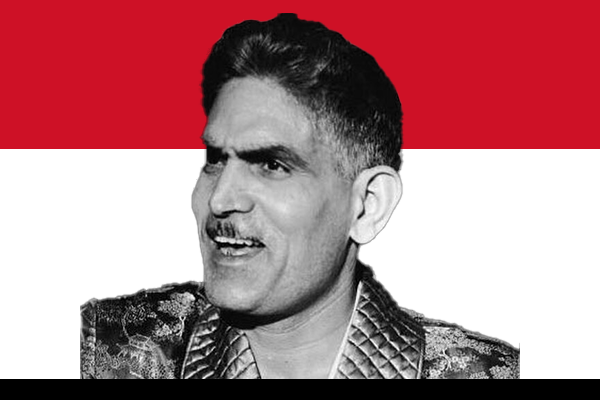
Early Life and Military Career
Abdul-Karim Qasim was born in 1914 in Baghdad into a modest family. He received his early education in Iraq and later joined the Iraqi Military College, where he developed strong nationalist views. His military training and discipline shaped his leadership style and political thinking. Qasim served in various military roles and gained experience that later enabled him to organize and lead revolutionary activities within the armed forces.
During his military career, Qasim became involved with nationalist officers who opposed foreign influence and the monarchy. He strongly believed in Iraqi independence, social justice, and the redistribution of national wealth. These ideas played a decisive role in shaping his political ambitions and future policies.
The 1958 Iraqi Revolution
In July 1958, Abdul-Karim Qasim played a leading role in the revolution that overthrew King Faisal II and abolished the monarchy. The revolution marked a turning point in Iraqi history, ending decades of royal rule and British influence. After the success of the revolution, Qasim emerged as Prime Minister and the most powerful figure in the new republican government.
The revolution was welcomed by many Iraqis who hoped for political freedom, economic reform, and national sovereignty. Qasim presented himself as a leader of the people and promised to build a more equal and independent Iraq.
Role as Prime Minister
As Prime Minister, Abdul-Karim Qasim focused on consolidating power and implementing reforms. He introduced policies aimed at reducing inequality and improving living conditions for ordinary citizens. His government carried out land reforms to weaken the power of large landowners and support poor farmers. He also expanded education, improved healthcare services, and promoted urban development.
Qasim adopted a neutral foreign policy and avoided alignment with major Cold War blocs. He emphasized Iraqi nationalism over pan-Arab unity, which brought him into conflict with Arab nationalist movements and neighboring countries. His decision to distance Iraq from certain regional alliances made him both admired and criticized.
Political Challenges and Opposition
Despite his reforms, Qasim faced growing opposition from various political groups, including Arab nationalists, Ba’athists, and communists. His leadership style became increasingly centralized, and he relied heavily on the military to maintain control. Political instability, internal rivalries, and assassination attempts weakened his position over time.
Qasim’s strained relations with political parties and military officers created an atmosphere of uncertainty. While many admired his social policies, others viewed his rule as authoritarian and divisive.
Downfall and Legacy
In February 1963, Abdul-Karim Qasim was overthrown and executed during a military coup. His fall marked the end of a significant chapter in Iraqi history. Although his time in power was relatively short, his influence remained strong.
Abdul-Karim Qasim is remembered as a leader who sought to reshape Iraq through reform and independence. Supporters praise his commitment to social justice and national sovereignty, while critics point to political repression and instability under his rule. His legacy continues to shape discussions about leadership, reform, and nationalism in Iraq.
Conclusion
Prime Minister Abdul-Karim Qasim remains a pivotal figure in Iraq’s modern political history. His rise through revolution, ambitious reforms, and dramatic downfall reflect the complexities of leadership during times of national transformation. Even decades later, his life and rule continue to be studied as a symbol of both hope and conflict in Iraq’s journey as a republic.