Mr. Abhisit Vejjajiva
In Office: 17 December 2008 – 5 August 2011
Political Party: Democrat
Home State: Newcastle upon Tyne
Lifespan: born 1964
Country: Thailand
Image credits available here.
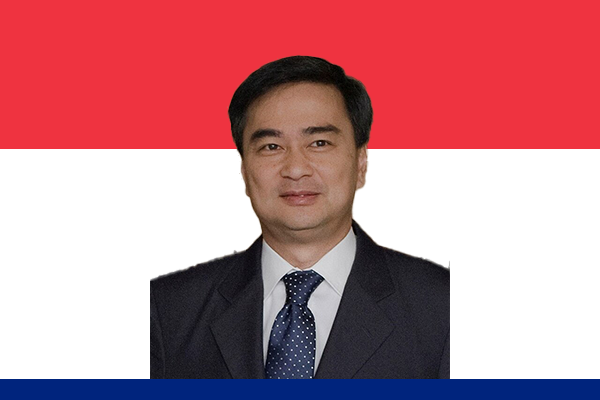
Early Life and Education
Abhisit Vejjajiva was born on August 3, 1964, in Newcastle upon Tyne, United Kingdom, into a family with strong political and academic roots. His father worked as a medical professor and later served in public administration. Abhisit received his early education in Thailand before moving to the United Kingdom for higher studies. He studied at Eton College and later earned degrees in Philosophy, Politics, and Economics from the University of Oxford. This international education shaped his intellectual outlook and prepared him for a career in public service.
Entry into Politics
Abhisit entered Thai politics in the early 1990s and quickly gained recognition as a disciplined and articulate leader. He joined the Democrat Party, Thailand’s oldest political party, and won a seat in the House of Representatives in 1992. Through consistent performance in parliamentary debates and policy discussions, he built a reputation as a principled politician. The party leadership soon recognized his potential, and in 2005, he became the leader of the Democrat Party.
Rise to the Office of Prime Minister
In 2008, Thailand faced intense political turmoil following protests and the collapse of the ruling coalition. Amid this instability, Abhisit successfully formed a new government with the support of coalition partners. He assumed office as Prime Minister in December 2008. His leadership symbolized a generational shift in Thai politics, as he brought a modern, reform-oriented image to the position.
Policies and Governance
As Prime Minister, Abhisit focused on economic recovery, social welfare, and national reconciliation. He launched stimulus programs to counter the global financial crisis and aimed to support low-income citizens through welfare initiatives. His government emphasized education, healthcare access, and infrastructure development. Abhisit also promoted transparency and accountability, stressing the importance of rule of law and democratic governance.
Challenges and Political Unrest
Despite his policy efforts, Abhisit faced major challenges during his tenure. Political polarization continued to divide Thai society, and large-scale protests erupted in Bangkok. His government struggled to balance security measures with democratic freedoms. The violent clashes during protests in 2010 became one of the most controversial aspects of his leadership and significantly affected public perception of his administration.
Later Political Career and Legacy
After losing the 2011 general election, Abhisit stepped down as Prime Minister but remained active in politics for several years. He later resigned from the leadership of the Democrat Party, taking responsibility for electoral setbacks. Abhisit’s legacy reflects both his intellectual approach to governance and the difficulties of leading Thailand during a deeply divided era. He remains remembered as a leader who sought reform and stability in challenging times.
Conclusion
Prime Minister Abhisit Vejjajiva played a crucial role in shaping Thailand’s modern political landscape. Through education, political discipline, and reform-oriented leadership, he attempted to guide the nation through uncertainty. His tenure highlights the complexities of democratic governance in times of social and political division.