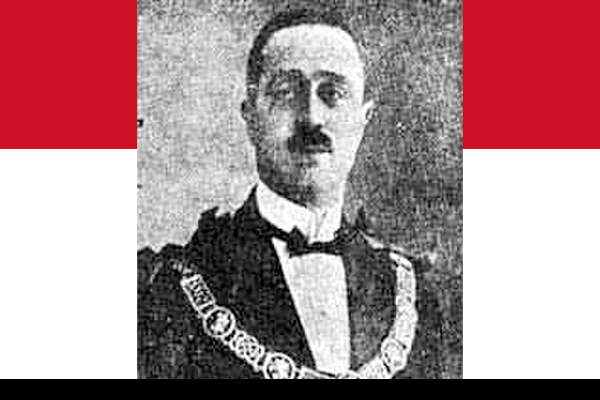
Early Life and Background
Ahmad Nami was born into an influential Ottoman-era family with strong political and administrative traditions. His upbringing provided him with access to education and exposure to governance at a young age. Like many leaders of his generation, he was shaped by the decline of the Ottoman Empire and the rise of European influence in the Middle East. These historical changes deeply affected his political outlook and career path.
His background helped him develop diplomatic skills and an understanding of both local Syrian society and international politics. This combination later made him a suitable candidate for leadership during the French Mandate.
Political Rise During the French Mandate
After the First World War, Syria came under French control, leading to the establishment of the French Mandate. During this period, the French authorities appointed Syrian leaders who they believed could maintain order while cooperating with colonial administration. Ahmad Nami emerged as one such figure.
He gained recognition for his administrative abilities and moderate political stance. His approach was seen as practical rather than revolutionary, which aligned with French interests at the time. As a result, he was appointed Prime Minister of Syria, a position that placed him at the center of political decision-making during a sensitive era.
Tenure as Prime Minister of Syria
Ahmad Nami served as Prime Minister during a period marked by political tension and public dissatisfaction with foreign rule. His government operated under the authority of the French High Commissioner, limiting the independence of Syrian leadership. Despite these constraints, he attempted to manage state affairs and maintain stability.
His administration focused on governance, administration, and cooperation with the mandate authorities. However, many Syrian nationalists criticized his government for lacking strong resistance against French control. This criticism reflected the growing divide between nationalist leaders demanding independence and those working within the mandate system.
Challenges and Criticism
One of the biggest challenges Ahmad Nami faced was public opposition from nationalist movements. Syrians increasingly demanded independence and rejected any form of foreign dominance. As Prime Minister, Nami found himself in a difficult position, trying to satisfy both the French administration and the Syrian population.
His moderate stance made him a controversial figure. While some viewed him as a stabilizing administrator, others saw him as too closely aligned with colonial interests. This tension limited his political influence and eventually contributed to the end of his tenure.
Later Life and Legacy
After leaving office, Ahmad Nami gradually stepped away from active politics. His role in Syrian history remains significant as a representative of the mandate-era leadership. Historians often view him as a symbol of the complex political realities faced by Syrian leaders under foreign control.
His legacy is neither purely positive nor entirely negative. Ahmad Nami’s career highlights the difficulties of governance during colonial rule and the limited choices available to leaders of that time. He remains an important figure for understanding Syria’s political transition in the early 20th century.
Conclusion
Prime Minister Ahmad Nami served Syria during one of the most challenging periods in its history. His leadership under the French Mandate reflects the struggle between cooperation and resistance, stability and nationalism. Although criticized by many, his role provides valuable insight into the political landscape of mandate-era Syria and the long journey toward independence.