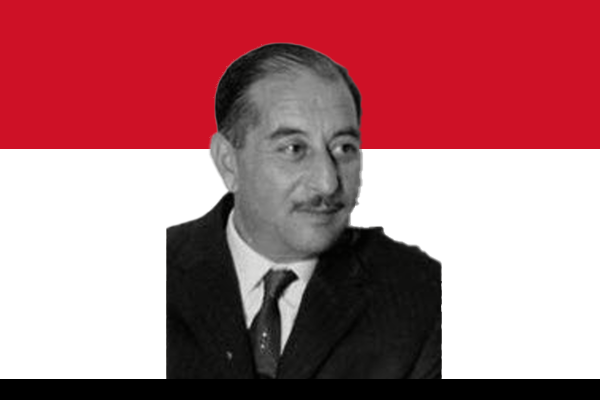
Early Life and Military Background
Ahmed Hassan al-Bakr was born in 1914 in Tikrit, a town that later produced several prominent Iraqi leaders. He pursued a military career and graduated from the Iraqi Military Academy, joining the officer corps at a time when the army played a decisive role in national politics. His military training shaped his leadership style, emphasizing discipline, hierarchy, and centralized authority. During his early career, al-Bakr developed strong nationalist views and became increasingly involved in political movements that opposed foreign influence and internal fragmentation.
Entry into Politics and the Ba’ath Party
Al-Bakr joined the Arab Socialist Ba’ath Party, which promoted Arab unity, socialism, and anti-imperialism. Through this affiliation, he emerged as a key organizer and strategist within Iraq’s political landscape. The Ba’ath Party’s growing influence among military officers helped al-Bakr rise steadily through the ranks. His combination of military experience and political loyalty made him a trusted figure within the party’s leadership.
Tenure as Prime Minister
Ahmed Hassan al-Bakr served as Prime Minister during critical moments in Iraq’s political history, particularly following periods of coups and counter-coups. His time in office reflected the Ba’ath Party’s efforts to stabilize the government and assert firm control over state institutions. As Prime Minister, al-Bakr worked to consolidate power, suppress opposition, and promote Ba’athist ideology within the administration.
His government focused on strengthening the role of the state in economic planning and national development. Al-Bakr supported policies aimed at increasing government control over key sectors, reinforcing national sovereignty, and reducing external influence. Although political freedoms were limited, the administration emphasized order and unity as necessary foundations for progress.
Transition to the Presidency
Al-Bakr’s performance and influence as Prime Minister paved the way for his eventual rise to the presidency. When he assumed the role of President of Iraq, he continued many of the policies and governing methods developed during his time as Prime Minister. The transition demonstrated his ability to navigate Iraq’s complex political environment and maintain party cohesion during uncertain times.
Leadership Style and Governance
As Prime Minister, al-Bakr ruled with a firm and authoritative approach. He relied heavily on trusted allies within the military and the Ba’ath Party to enforce decisions and maintain stability. His leadership style prioritized state strength over political pluralism, reflecting the broader trends of governance in the region during that era. Supporters viewed him as a stabilizing force, while critics pointed to restrictions on political opposition and civil liberties.
Legacy and Historical Significance
Prime Minister Ahmed Hassan al-Bakr remains a significant figure in Iraqi history. His tenure helped lay the foundations for long-term Ba’ath Party dominance and shaped the political structures that influenced Iraq for decades. While his leadership brought consolidation and state-building, it also marked the beginning of an era characterized by centralized power. Al-Bakr’s role as Prime Minister stands as an important chapter in understanding Iraq’s modern political evolution.