Mr. Alec Douglas-Home
In Office: 19 October 1963 – 16 October 1964
Political Party: Conservative
Home State: Mayfair
Lifespan: 1903–1995
Country: United Kingdom
Image credits available here.
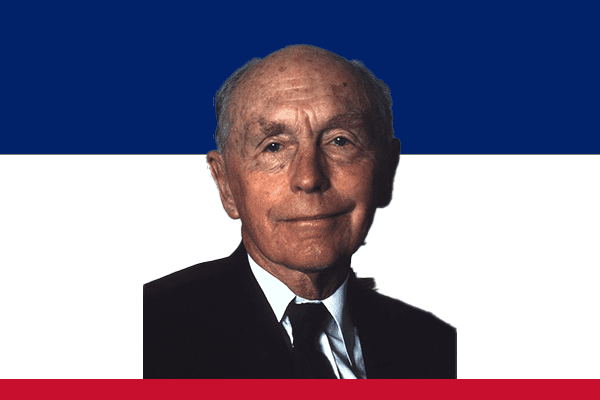
Early Life and Background
Alec Douglas-Home was born on 2 July 1903 in London, England. He came from an aristocratic Scottish family and was originally known as Lord Dunglass. He studied at Eton College and later attended Christ Church, Oxford. His privileged upbringing gave him strong connections within Britain’s political and social elite. However, he also developed a deep sense of public duty and responsibility.
Before entering top-level politics, he served in the British Army during World War II. His military experience shaped his disciplined character and strengthened his commitment to national service. After the war, he continued his political career with greater focus and determination.
Political Career
Alec Douglas-Home entered Parliament in 1931 as a Conservative Member of Parliament. Later, when he inherited his family title in 1951, he moved to the House of Lords as the 14th Earl of Home. During the 1950s, he held several important positions in government. He served as Secretary of State for Commonwealth Relations and later as Foreign Secretary.
As Foreign Secretary, Alec Douglas-Home earned respect for his steady and thoughtful approach to international affairs. He handled diplomatic matters carefully and worked to protect Britain’s global interests during the Cold War. His experience in foreign policy made him a trusted senior figure in the Conservative government.
Becoming Prime Minister
In October 1963, Prime Minister Harold Macmillan resigned because of ill health. The Conservative Party then chose Alec Douglas-Home as his successor. Since he was a member of the House of Lords, he took the unusual step of renouncing his peerage under the Peerage Act 1963. This decision allowed him to return to the House of Commons and serve as Prime Minister in a more democratic and modern way.
His appointment surprised many people because Britain was changing rapidly, and some critics believed that an aristocratic leader did not represent the future of the country. Even so, Alec Douglas-Home accepted the challenge and tried to unite the Conservative Party during a difficult period.
Leadership and Challenges
As Prime Minister, Alec Douglas-Home faced strong political pressure. The Conservative Party had been weakened by internal divisions and public criticism after years in power. He worked actively to restore confidence in the government and presented himself as honest, calm, and responsible.
However, his government struggled to win over a changing electorate. In the 1964 general election, the Conservatives lost narrowly to the Labour Party led by Harold Wilson. After this defeat, Alec Douglas-Home stepped down as Prime Minister. Despite the loss, many people respected the dignity and grace with which he handled both leadership and defeat.
Legacy
Alec Douglas-Home remained active in politics after leaving office. He later served again as Foreign Secretary from 1970 to 1974 under Prime Minister Edward Heath. His long public career showed his dedication to Britain and his belief in duty above personal ambition.