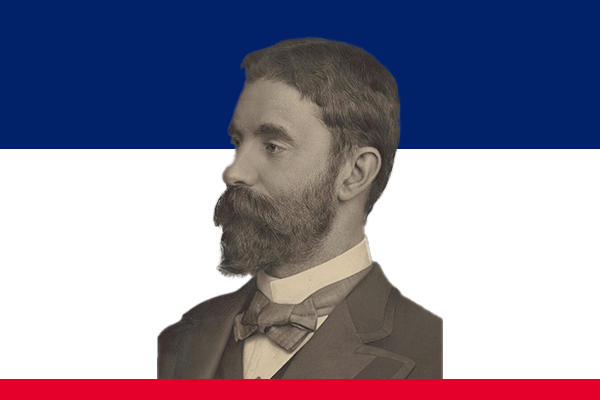
Early Life and Education
Alfred Deakin was born on August 3, 1856, in Melbourne, Victoria. He grew up in a modest household and received his education at Melbourne Grammar School before attending the University of Melbourne. He studied law, but his interests extended to literature, philosophy, and politics. From a young age, he showed remarkable oratory skills and a passion for reform.
Entry into Politics
Deakin entered politics in the 1870s, driven by his vision for a fairer society. He became a member of the Victorian Legislative Assembly, where he championed causes such as land reform, irrigation, and social welfare. His energy and persuasive speeches made him a rising figure in Australian politics. By the 1890s, he emerged as a strong advocate of Australian federation.
Role in Federation
Deakin played a central role in the federation movement. He actively participated in the conventions that led to the drafting of the Australian Constitution. His negotiating skills helped bridge divides between the colonies, ensuring compromises that made federation possible in 1901. He stood beside Sir Edmund Barton during the establishment of the Commonwealth of Australia and earned recognition as a “Father of Federation.”
Prime Ministerial Terms
Alfred Deakin served three non-consecutive terms as Prime Minister of Australia: 1903–1904, 1905–1908, and 1909–1910. He displayed strong leadership during each term, balancing the demands of a young nation.
First Term (1903–1904): Deakin focused on building the administrative framework of the Commonwealth. He strengthened the judiciary by supporting the establishment of the High Court of Australia.
Second Term (1905–1908): He worked on national defense, immigration policies, and social reforms. He supported the creation of the Australian Navy and pushed for laws that protected workers’ rights.
Third Term (1909–1910): He led the “Fusion” government, uniting conservative forces against the rising Labor Party. Although his government lasted only a short time, he left a lasting imprint on Australia’s political landscape.
Social and Economic Reforms
Deakin believed in using government power to improve the lives of ordinary Australians. He introduced protective tariffs to support local industries and strengthen the economy. He also supported arbitration systems to resolve disputes between workers and employers. His policies ensured that Australia became known for progressive labor rights, including fair wages and reasonable working conditions.
Vision for a National Identity
Deakin envisioned a united Australian identity. He promoted immigration policies that aimed to preserve cultural cohesion, reflecting the values of his era. At the same time, he encouraged education, civic responsibility, and the arts. His speeches inspired a sense of national pride and unity, which helped solidify the young Commonwealth.
Later Years and Legacy
Deakin retired from politics in 1913 due to declining health. Despite his withdrawal from public life, Australians continued to honor his contributions. He passed away on October 7, 1919, but his vision remained deeply embedded in the nation’s institutions. His legacy as a founding father and nation-builder continues to shape Australia.
Conclusion
Alfred Deakin stood as one of Australia’s most influential Prime Ministers. He guided the nation through its formative years, promoted social justice, and worked tirelessly for federation. His leadership blended vision with pragmatism, creating policies that strengthened both governance and society. Today, Australians remember him not only as a political leader but also as a statesman who helped forge the identity of a modern nation.