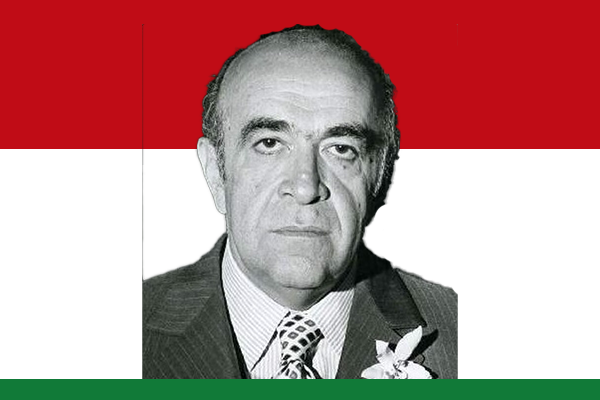
Early Life and Rise in Government
Amir-Abbas Hoveyda began his journey in a cosmopolitan environment shaped by diplomacy and education. Born in 1919, he grew up in a family deeply engaged in international affairs, and this background encouraged him to pursue studies in political science and economics. He later joined the Iranian Foreign Ministry, where he sharpened his knowledge of global politics and governance.
Hoveyda moved through various diplomatic roles and built a reputation for discipline, efficiency, and administrative talent. When he returned to Iran after postings abroad, he directed his skills toward national development. His competence soon drew the attention of Mohammad Reza Shah Pahlavi, who relied on capable technocrats to modernize Iran. This trust opened the path to Hoveyda’s rapid ascent through government ranks.
Entry into High Politics
Hoveyda’s political career gained momentum when he joined the National Iranian Oil Company (NIOC), an institution central to Iran’s economic growth. He embraced modernization policies, supported organizational reforms, and engaged actively with international partners. His performance elevated him to prominent political circles, eventually leading him to the cabinet.
His appointment as Minister of Finance strengthened his influence. In this role, he advocated economic planning and budget discipline. His ability to negotiate with both domestic and international actors further established his credibility.
Tenure as Prime Minister
In 1965, Hoveyda became Prime Minister, marking the beginning of one of the longest premierships in Iran’s modern history. He embraced the Shah’s reformist agenda and implemented policies under the White Revolution. He supported industrialization, urban development, literacy programs, and modernization of state institutions.
Hoveyda cultivated a technocratic style of governance. He encouraged experts to guide key decisions and prioritized administrative efficiency. He also promoted economic diversification, aiming to reduce Iran’s dependence on oil revenues. Under his leadership, Iran experienced rapid industrial expansion, improved infrastructure, and rising living standards for many citizens.
Despite these successes, his government also faced criticism. Some accused him of concentrating power in bureaucratic hands, while others argued he tolerated political repression and corruption. Yet Hoveyda continued updating policies and adjusting programs as Iran confronted social and economic shifts.
Political Challenges and Resignation
As social unrest grew in the mid-1970s, Hoveyda confronted rising opposition and criticism of government policies. Economic imbalances, inflation, and demands for political freedoms intensified public dissatisfaction. In 1977, he resigned from the premiership and accepted the position of Minister of the Court, a role that allowed him to remain close to the Shah during turbulent times.
However, the Iranian Revolution of 1978–79 rapidly transformed the political landscape. Hoveyda became a symbol of the ancien régime, and revolutionary forces arrested him soon after the collapse of the monarchy.
Trial and Execution
Revolutionary courts charged him with corruption, mismanagement, and loyalty to the Shah. Despite his efforts to defend his record, the court sentenced him to death. His execution in 1979 ended a long political career and sparked debates about justice, due process, and political retribution.
Legacy
Historians continue to study Hoveyda’s leadership and contributions. Supporters highlight his administrative ability, modernization efforts, and commitment to economic reform. Critics focus on the shortcomings of his government and his close association with authoritarian rule. Regardless of perspective, his career remains a significant chapter in Iran’s twentieth-century history, and his story continues to influence discussions about governance, reform, and political responsibility in modern Iran.