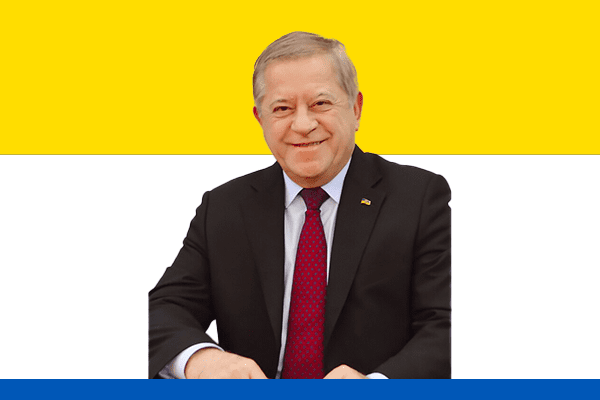
Early Life and Education
Anatoliy Kinakh was born on August 4, 1954, in the village of Brătușeni in present-day Moldova, which was then part of the Soviet Union. During his childhood, his family later moved to Ukraine, where he spent most of his life. Kinakh pursued higher education at the Leningrad Shipbuilding Institute (now Saint Petersburg State Marine Technical University). He studied engineering and developed strong technical knowledge, which later helped him understand Ukraine’s industrial sector and economic challenges.
After graduating, Kinakh worked as an engineer and gradually moved into managerial positions within the shipbuilding industry. His professional background gave him firsthand experience with the economic realities of heavy industry and manufacturing, two key sectors in Ukraine’s economy.
Entry into Politics
Kinakh began his political career during the final years of the Soviet Union. After Ukraine declared independence in 1991, he became actively involved in building the country’s new political and economic institutions. During the 1990s, he served in several government roles and gained recognition as an advocate for industrial development and economic modernization.
He also became the president of the Ukrainian Union of Industrialists and Entrepreneurs, an influential organization representing business leaders and industrial enterprises. In this role, Kinakh promoted cooperation between government authorities and private businesses. He encouraged policies that would support economic growth, investment, and industrial competitiveness.
Appointment as Prime Minister
In May 2001, President Leonid Kuchma appointed Anatoliy Kinakh as Prime Minister after the resignation of Viktor Yushchenko’s government. The Ukrainian parliament, known as the Verkhovna Rada, approved his appointment. Kinakh took office during a time when Ukraine faced economic restructuring, political challenges, and pressure to improve governance.
Kinakh’s government focused strongly on economic stability. He supported reforms that encouraged investment, strengthened industrial production, and improved relations with international economic partners. His leadership emphasized cooperation rather than confrontation in politics, and he attempted to maintain balance among different political groups in parliament.
Policies and Achievements
During his tenure, Kinakh concentrated on economic growth and industrial modernization. He supported policies that aimed to stabilize the national economy and promote exports. Ukraine experienced moderate economic growth during this period, which helped improve confidence among businesses and investors.
Kinakh also encouraged dialogue between the government and private companies. He believed that economic development required collaboration between policymakers and entrepreneurs. His administration worked to reduce bureaucratic barriers and create more favorable conditions for industry.
Another important focus of his government involved energy policy and economic efficiency. Ukraine relied heavily on imported energy, especially natural gas. Kinakh supported measures that encouraged more efficient energy use and stronger management of the energy sector.
Later Political Career
After leaving the office of Prime Minister in November 2002, Kinakh continued to play an active role in Ukrainian politics. He served as a member of parliament and held several ministerial positions in later governments. His political career also included cooperation with President Viktor Yushchenko during the mid-2000s.
Kinakh remained known as a moderate political figure who preferred dialogue and economic pragmatism over ideological conflict. His experience in both industry and government helped him maintain influence in policy discussions related to economic development.
Legacy
Anatoliy Kinakh’s time as Prime Minister may have been relatively short, but his leadership reflected Ukraine’s effort to build a stable economic foundation during its early years as an independent state. He promoted cooperation between business and government, encouraged economic reforms, and supported industrial growth.