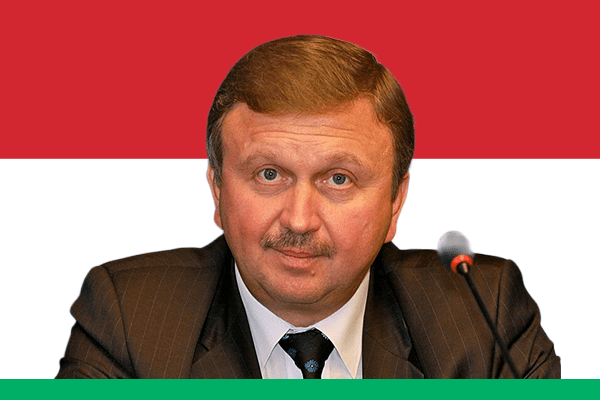
Early Life and Education
Andrei Kobyakov was born on November 21, 1960, in Moscow, Soviet Union. Although he was born in Russia, he built most of his political and professional career in Belarus. He graduated from the Moscow Aviation Institute, where he studied mechanical engineering. Later, he expanded his knowledge in economics and public administration, which prepared him for senior government positions.
Kobyakov started his professional journey in industrial and engineering sectors. Through hard work and technical expertise, he gained recognition for his management abilities. His strong educational background helped him understand economic planning and state administration effectively.
Entry into Politics
Andrei Kobyakov entered public service during the years following the collapse of the Soviet Union. He quickly established himself as a capable administrator. He held several important government positions, including Deputy Prime Minister and Head of the Presidential Administration of Belarus.
His experience in economic management increased his influence within the Belarusian government. He also served as the Ambassador of Belarus to Russia, where he strengthened diplomatic and economic relations between the two neighboring countries. His diplomatic service demonstrated his ability to manage international cooperation and negotiations.
Prime Minister of Belarus
In December 2014, President Alexander Lukashenko appointed Andrei Kobyakov as the Prime Minister of Belarus. At that time, Belarus faced economic difficulties caused by falling oil prices, currency instability, and regional economic pressures.
As Prime Minister, Kobyakov focused on improving economic stability and increasing industrial productivity. He encouraged modernization in state-owned enterprises and promoted stronger trade partnerships. Instead of avoiding economic reforms, he actively searched for solutions that could strengthen the Belarusian economy.
He also supervised government programs related to infrastructure, manufacturing, and agriculture. Under his leadership, Belarus continued cooperation with Russia and other members of the Eurasian Economic Union. Kobyakov believed that economic integration and regional partnerships could support national growth.
Economic Policies and Leadership
Kobyakov emphasized financial discipline and careful economic planning. He encouraged industries to improve efficiency and reduce unnecessary spending. His government worked to stabilize inflation and maintain employment levels during challenging economic periods.
Although Belarus continued to rely heavily on state-controlled industries, Kobyakov supported gradual modernization efforts. He promoted investment projects and encouraged technological development in manufacturing sectors.
His leadership style focused on administrative organization and practical decision-making. Rather than creating dramatic political changes, he concentrated on maintaining economic balance and government stability.
Challenges During His Tenure
During his term as Prime Minister, Kobyakov faced several economic and political challenges. Belarus experienced slow economic growth and increasing pressure from global market conditions. Currency fluctuations and reduced demand for exports affected the country’s financial situation.
Despite these difficulties, Kobyakov continued to implement policies aimed at economic recovery. He worked with government agencies and international partners to maintain stability. However, criticism emerged regarding the pace of reforms and the country’s dependence on state-controlled systems.
In 2018, President Alexander Lukashenko dismissed Kobyakov and appointed a new Prime Minister. The leadership change reflected the government’s desire for faster economic reforms and stronger administrative performance.
Legacy and Importance
Andrei Kobyakov remains an important figure in Belarusian politics and administration. His years of public service demonstrated his dedication to economic management and state governance. He contributed to Belarus’s diplomatic relations, administrative reforms, and economic planning.
Although his tenure as Prime Minister faced criticism, he maintained stability during a difficult economic period. His practical leadership and government experience earned him recognition as one of Belarus’s key political figures of the 21st century.
Conclusion
Andrei Kobyakov played a major role in Belarusian politics through his work as an economist, diplomat, and Prime Minister. He focused on economic stability, administrative efficiency, and regional cooperation throughout his career. His contributions continue to influence discussions about governance and economic development in Belarus.