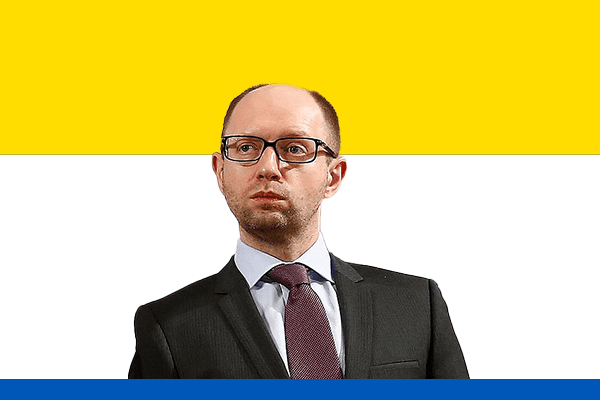
Early Life and Education
Arseniy Yatsenyuk was born on May 22, 1974, in Chernivtsi. He grew up in a well-educated family that valued learning and discipline. Yatsenyuk studied law at Yuriy Fedkovych Chernivtsi National University, where he earned a degree in law. He later obtained a degree in economics from the same institution. His academic background in law and economics helped him understand governance, financial systems, and international relations.
Before entering politics, Yatsenyuk worked in banking and finance. He gained experience in economic management and financial policy. This professional background prepared him for leadership roles in government.
Entry into Politics
Yatsenyuk entered Ukrainian politics in the early 2000s. In 2001 he became the Minister of Economy of the Autonomous Republic of Crimea. His work in this role helped him gain recognition as a capable economist and administrator.
In 2003 he was appointed Deputy Chairman of the National Bank of Ukraine. Later, he served as Minister of Economy of Ukraine in 2005. Yatsenyuk continued to rise in national politics and in 2007 he became the Chairman (Speaker) of the Verkhovna Rada. His leadership in parliament strengthened his reputation as a reform-minded politician.
Prime Minister of Ukraine
In February 2014, following the political upheaval of the Euromaidan and the departure of President Viktor Yanukovych, Ukraine formed a new government. Arseniy Yatsenyuk became Prime Minister on February 27, 2014.
Yatsenyuk faced immediate challenges. Ukraine experienced severe economic problems and political instability. Russia’s annexation of Crimea and conflict in eastern Ukraine created additional pressure on the government. Yatsenyuk’s administration focused on stabilizing the economy, securing international financial support, and strengthening national security.
His government worked closely with international institutions such as the International Monetary Fund and the European Union. These partnerships helped Ukraine receive financial assistance and implement economic reforms.
Reforms and Policies
As Prime Minister, Yatsenyuk introduced several reforms aimed at modernizing Ukraine’s political and economic systems. His government reduced energy subsidies, restructured the national budget, and implemented anti-corruption measures. These reforms aimed to stabilize the economy and improve transparency in government institutions.
Yatsenyuk also supported closer cooperation with European institutions. His administration promoted the implementation of the Ukraine–European Union Association Agreement. This agreement strengthened political and economic relations between Ukraine and Europe.
Additionally, his government worked to strengthen Ukraine’s defense and security policies during the ongoing conflict in eastern Ukraine.
Resignation and Later Activities
In April 2016, Arseniy Yatsenyuk resigned as Prime Minister after two years in office. Political pressure and declining public support contributed to his decision to step down. Volodymyr Groysman succeeded him as Prime Minister of Ukraine.
After leaving office, Yatsenyuk remained active in Ukrainian politics and international affairs. He continued to advocate for democratic reforms, European integration, and stronger international partnerships for Ukraine.
Legacy
Arseniy Yatsenyuk’s tenure as Prime Minister occurred during a critical moment in Ukraine’s history. He led the country through political transformation, economic crisis, and geopolitical conflict. Although his reforms were sometimes controversial, many analysts credit him with stabilizing Ukraine’s economy and strengthening its international alliances.
His leadership during the early years after the Euromaidan revolution played an important role in shaping Ukraine’s political direction. Yatsenyuk remains an influential figure in Ukraine’s modern political landscape.