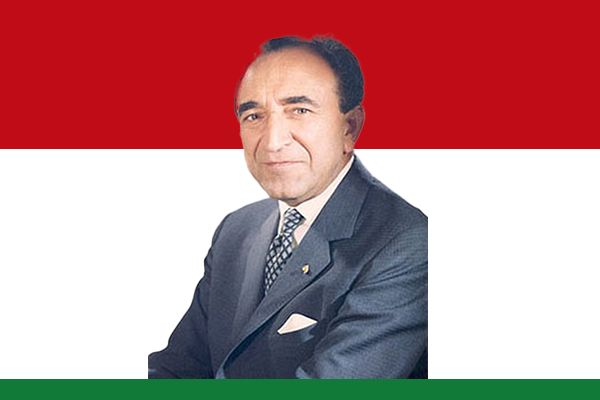
Early Life and Rise to Influence
Asadollah Alam, born in 1919 in Birjand, grew up in a powerful aristocratic family that shaped his early understanding of governance, diplomacy, and leadership. He embraced education with enthusiasm and cultivated strong ties with influential personalities within Iran’s ruling elite. These connections helped him enter public service at a young age. Alam quickly displayed political skill and loyalty, qualities that impressed Mohammad Reza Shah Pahlavi, who later relied heavily on him as a trusted advisor.
Entering the Political Arena
Alam stepped into political life with confidence, assuming roles that required administrative discipline and strategic thinking. He served as governor in various provinces, where he implemented development programs, strengthened local governance, and promoted the monarchy’s vision. His decisive leadership earned him national recognition and positioned him as one of the Shah’s most reliable allies.
By the late 1950s, he secured ministerial positions in the government and built a reputation as a firm defender of royal authority. His strong ties with the court ensured that he remained central to decision-making processes. As Iran experienced political turbulence, the Shah increasingly depended on Alam’s counsel and loyalty.
Appointment as Prime Minister
In 1962, Mohammad Reza Shah appointed Asadollah Alam as the Prime Minister of Iran. Alam accepted the role at a time when the country stood at the threshold of major transformation. He immediately began advancing the Shah’s ambitious modernization project, later known as the White Revolution. As Prime Minister, he coordinated reforms aimed at reshaping Iran’s socio-economic structure.
Driving the White Revolution
Alam championed the White Revolution with energy and determination. He promoted land reforms that redistributed agricultural property, supported the expansion of women’s rights, and oversaw literacy and health campaigns across rural Iran. He pushed government ministries to implement the reforms rapidly and efficiently. Under his leadership, Iran witnessed rapid infrastructural growth, increasing urbanization, and broader access to education.
However, Alam also faced strong resistance from conservative groups, landowners, and segments of the clergy. He responded by reinforcing state authority and defending the modernization agenda through firm political messaging. His actions maintained the momentum of reform, even as opposition intensified.
Political Challenges and Resignation
Alam’s tenure coincided with rising domestic tension. Religious leaders criticized the reforms, and political activists organized protests. Although he actively worked to stabilize the situation, the pressure grew. In 1964, he stepped down as prime minister, but he continued to influence Iranian politics from the royal court.
Later Career and Continued Loyalty
After leaving the premiership, Alam remained one of the Shah’s closest confidants. He accepted the role of Minister of the Royal Court and managed sensitive political matters, foreign relations, and internal security concerns. His diaries, published decades later, revealed intimate details of Iran’s political landscape and the monarchy’s internal dynamics.
Alam continued serving the Shah until his death in 1978. His unwavering loyalty and political dedication marked him as one of the most influential statesmen of Iran’s modern era.
Legacy
Asadollah Alam’s legacy reflects his central role in the Shah’s modernization efforts and his influence during a pivotal era in Iran’s history. Supporters remember him as a determined reform advocate and a loyal statesman, while critics highlight the authoritarian nature of his governance. Regardless of perspective, Alam left a lasting imprint on Iran’s political evolution, shaping the nation’s path during a time of profound change.