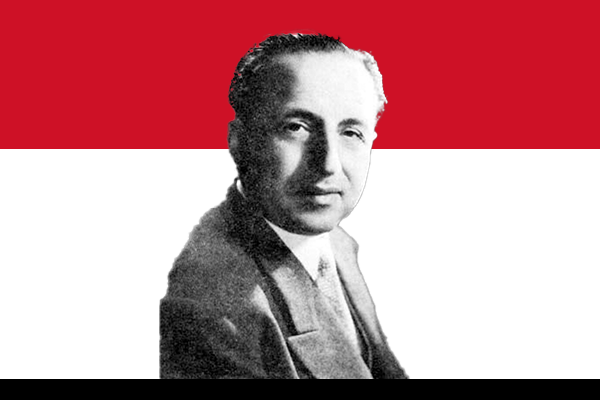
Early Life and Education
Bashir al-Azma was born in 1910 into a well-known Damascene family with a tradition of public service and political involvement. His upbringing emphasized education, civic responsibility, and national identity at a time when Syria was under French mandate. Al-Azma pursued higher education in law, a field that shaped his constitutional outlook and respect for legal institutions. His academic background equipped him with the skills needed for diplomacy, administration, and legislative work, all of which later defined his political style.
Entry into Politics
After Syria gained independence, al-Azma entered public life during the formative years of the Syrian Republic. He became involved in parliamentary politics and government administration, gaining recognition as a capable technocrat and moderate nationalist. Unlike radical ideologues, al-Azma favored gradual reform, constitutionalism, and cooperation among political forces. This approach earned him trust among civilian politicians but often put him at odds with ambitious military officers.
First Term as Prime Minister
Bashir al-Azma first assumed the office of Prime Minister in 1949, a year marked by unprecedented political instability and multiple military coups. His appointment came during an effort to restore civilian rule and institutional order. As Prime Minister, he focused on stabilizing government operations, strengthening state authority, and reaffirming constitutional governance. However, the dominance of the military limited his ability to implement long-term reforms, and his government faced constant pressure from competing power centers.
Later Leadership and Political Challenges
Al-Azma returned to the premiership in the early 1960s, most notably from 1962 to 1963, during another critical phase in Syria’s history. This period followed the collapse of the union with Egypt and the end of the United Arab Republic. As Prime Minister, al-Azma worked to reestablish Syria’s political institutions, revive parliamentary life, and address economic and administrative challenges. He sought balance between nationalist aspirations and political pluralism, emphasizing civilian authority over military intervention.
Despite his efforts, his government operated in an environment of deep ideological division, with rising influence from Baathist and military elements. The 1963 coup ultimately ended his tenure and marked a decisive shift toward one-party and military-dominated rule.
Political Philosophy and Governance Style
Bashir al-Azma believed strongly in constitutional legitimacy, rule of law, and moderate nationalism. He preferred dialogue over confrontation and institutional solutions over revolutionary change. His leadership style was pragmatic, cautious, and rooted in legal principles. While this approach appealed to supporters of parliamentary democracy, it proved insufficient against the rapid rise of authoritarian and ideological movements in Syria.
Legacy and Historical Significance
Bashir al-Azma’s legacy lies in his role as a symbol of Syria’s civilian political tradition during a volatile era. He represented an alternative path for Syrian governance—one based on elected institutions, legal norms, and political compromise. Although his governments were short-lived, they reflect an important chapter in Syria’s modern history, when democratic possibilities still existed before being eclipsed by prolonged military and authoritarian rule.
Conclusion
Bashir al-Azma remains a significant figure in Syria’s political narrative. His repeated service as Prime Minister during times of crisis underscores both his personal integrity and the instability of the political system he sought to uphold. His life and career offer valuable insight into the challenges faced by moderate leaders in a region undergoing profound political transformation.