Early Life and Career
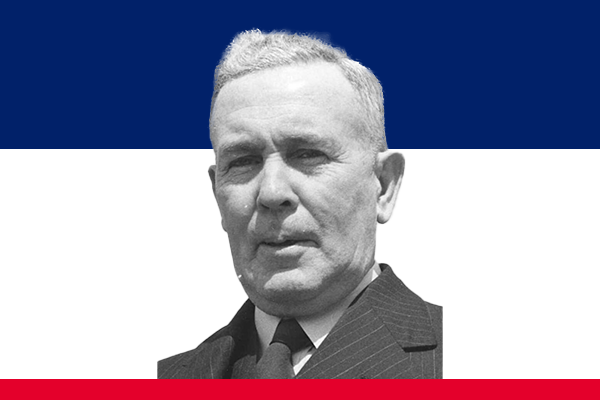
Joseph Benedict Chifley, widely known as Ben Chifley, was born on September 22, 1885, in Bathurst, New South Wales. He grew up in a working-class family and experienced hardship at an early age after his father’s death. Chifley worked as a train driver and became deeply involved in union activities, which shaped his strong connection with workers. He educated himself through extensive reading, showing a passion for economics and governance.
Chifley joined the Australian Labor Party (ALP) and entered politics with a determination to represent ordinary citizens. In 1928, he won a seat in the House of Representatives for Macquarie, where he began influencing national policies. Though he lost his seat in 1931, he returned to Parliament in 1940, reaffirming his commitment to Labor values.
Rise to Leadership
Ben Chifley gained prominence during World War II when Prime Minister John Curtin appointed him Treasurer in 1941. Chifley demonstrated his expertise in managing the economy during wartime. He implemented strict financial controls, introduced rationing, and directed national resources to support the war effort. His careful management stabilized the economy and strengthened public trust in his leadership.
After Curtin’s death in 1945 and Frank Forde’s brief term, the Labor Party elected Chifley as its leader. He became Prime Minister on July 13, 1945, taking charge at a critical moment when Australia transitioned from war to peace.
Domestic Policies and Achievements
As Prime Minister, Chifley focused on rebuilding the nation and implementing progressive reforms. He introduced wide-ranging social and economic programs that shaped Australia’s post-war identity.
Chifley launched ambitious housing projects to meet the growing needs of returning servicemen and their families. He supported the expansion of the Commonwealth Bank and emphasized government control of essential industries to ensure stability. His government initiated large-scale immigration programs to boost the workforce and strengthen the economy.
Chifley also played a vital role in establishing the Snowy Mountains Hydro-Electric Scheme, one of the most significant engineering projects in Australia’s history. The scheme provided renewable energy and water for irrigation, supporting both industry and agriculture. Through these policies, he aimed to secure long-term prosperity for Australia.
Foreign Policy and International Role
Chifley positioned Australia as a responsible global partner in the post-war world. He supported the creation of the United Nations and advocated for collective security. His government strengthened ties with Britain and the United States, while also supporting independence movements in Asia.
He worked closely with External Affairs Minister H.V. Evatt to secure Australia’s role in international diplomacy. Under his leadership, Australia emerged as an active voice in global affairs, promoting peace and cooperation.
Challenges and Defeat
Despite his achievements, Chifley faced growing opposition. His attempt to nationalize private banks in 1947 sparked controversy and legal battles, damaging his political standing. The public grew concerned about excessive government control, and critics labeled his policies as too radical.
In the 1949 federal election, Robert Menzies and the Liberal-Country coalition defeated Chifley’s government. The shift reflected public preference for conservative policies during the early Cold War years.
Legacy
Ben Chifley continued to serve as Leader of the Opposition until his death on June 13, 1951. Australians remember him as a leader who dedicated his life to working people. His vision of a “light on the hill” symbolized hope and progress, inspiring generations of Labor leaders.
Through his social reforms, economic policies, and commitment to equality, Chifley left an enduring mark on Australian society. He guided the nation through transformation and helped shape the foundation of modern Australia.