Mr. Bonar Law
In Office: 23 October 1922 – 20 May 1923
Political Party: Conservative
Home State: Morley
Lifespan: 1858–1923
Country: United Kingdom
Image credits available here.
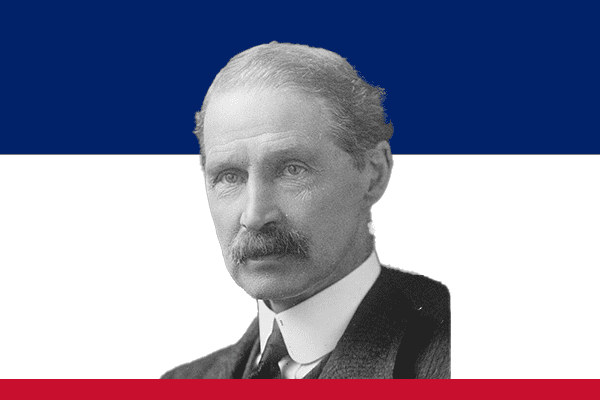
Early Life and Education
Andrew Bonar Law was born on 16 September 1858 in Kingston, New Brunswick, Canada. His father was a Presbyterian minister, and his family lived a modest life. After his mother’s death, relatives in Scotland raised him. He moved to Glasgow at a young age and grew up in a strict but supportive environment.
Bonar Law did not attend a university, but he gained practical knowledge through business experience. He joined the iron and steel business run by his family and quickly showed strong organizational and leadership abilities. His success in business helped him gain financial stability and respect within his community.
Entry into Politics
Bonar Law entered politics in 1900 when he was elected as a Conservative Member of Parliament for Glasgow Blackfriars and Hutchesontown. He quickly gained a reputation as a capable speaker and a disciplined party member. His colleagues respected his straightforward personality and strong commitment to Conservative principles.
During the early years of his political career, he focused on economic issues and trade policy. He strongly supported tariff reform, which aimed to protect British industries from foreign competition. His dedication and political skills helped him rise quickly within the Conservative Party.
Leadership of the Conservative Party
In 1911, Bonar Law became the leader of the Conservative Party. At that time, the party faced internal divisions and political challenges. Bonar Law worked hard to unite party members and strengthen the party’s position in Parliament. His calm and practical leadership style helped rebuild confidence among Conservative supporters.
During the First World War, he played an important role in the coalition government led by Prime Minister David Lloyd George. Bonar Law served in several key positions, including Chancellor of the Exchequer and Leader of the House of Commons. He worked closely with other leaders to support Britain’s war effort and manage the country’s finances.
Becoming Prime Minister
In October 1922, the Conservative Party decided to withdraw from the coalition government. Party members then selected Bonar Law as their new leader, and he became Prime Minister of the United Kingdom. His leadership marked a turning point in British politics because it ended the wartime coalition government.
As Prime Minister, Bonar Law focused on restoring political stability and strengthening the economy. Britain faced financial difficulties and social challenges after the war. He encouraged careful government spending and supported policies designed to rebuild the nation’s economy.
Resignation and Later Life
Bonar Law’s time as Prime Minister did not last long. In 1923, doctors diagnosed him with throat cancer. His health quickly deteriorated, making it impossible for him to continue leading the government. In May 1923, he resigned as Prime Minister.
After leaving office, he spent his remaining months away from public life. Bonar Law died on 30 October 1923 in London. His death marked the end of a political career that had greatly influenced British politics during a crucial historical period.
Legacy
Bonar Law remains an important figure in British political history. He demonstrated that determination and hard work could lead to great achievements, even for someone without elite education or aristocratic background. His leadership strengthened the Conservative Party and helped guide Britain through a difficult period after the First World War.