Mr. Boun Oum
In Office: 13 December 1960 – 23 June 1962
25 March 1948 – 24 February 1950
Political Party: Independent
Home State: Champasak province
Lifespan: 1911–1980
Country: Laos
Image credits available here.
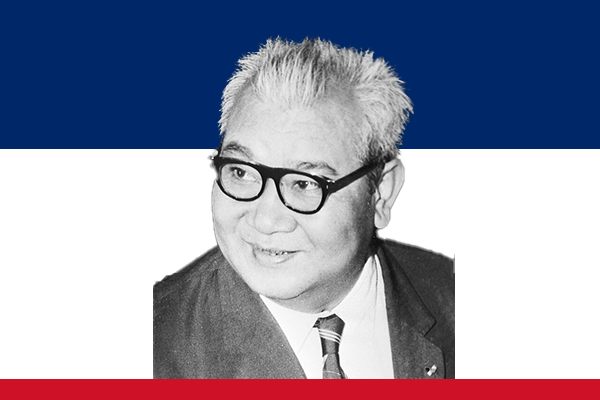
Early Life and Background
Boun Oum was born into the royal family of Champasak, a historically significant region in southern Laos. As a prince of Champasak, he inherited both political influence and social responsibility at an early age. His royal lineage positioned him as a natural leader among conservative and monarchist factions. Educated in traditional Lao governance and exposed to French colonial administration, Boun Oum developed strong views favoring stability, hierarchy, and the preservation of royal authority.
Entry into Politics
Boun Oum entered national politics as Laos moved toward independence from French colonial rule. During this transitional period, the country faced deep divisions between royalists, neutralists, and communist forces. Boun Oum aligned himself firmly with the royalist camp, advocating close cooperation with the monarchy and resistance against communist expansion. His political rise was supported by conservative elites, regional leaders, and foreign allies who viewed him as a stabilizing force.
First Term as Prime Minister
Boun Oum first served as Prime Minister of Laos in the early 1960s, a time when the nation was struggling to establish effective governance. His administration emphasized law and order, national unity under the monarchy, and opposition to leftist insurgencies. Although his government faced constant pressure from rival factions, Boun Oum attempted to maintain administrative continuity and protect traditional institutions.
Role During Political Crisis
Laos experienced repeated coups, coalition governments, and armed conflict during Boun Oum’s political career. In 1964, amid renewed instability, he returned to office as Prime Minister. His second term occurred during one of the most volatile phases of Lao history, as Cold War rivalries intensified within the country. Boun Oum supported strong measures to counter communist influence, which earned him backing from conservative forces but also criticism from neutralists and reformists.
Leadership Style and Policies
Boun Oum’s leadership style was authoritative and rooted in royal tradition. He believed that Laos required firm governance to survive internal division and external pressure. His policies prioritized security, alliance with the monarchy, and cooperation with anti-communist forces. While these measures aimed to preserve national sovereignty, they also limited political compromise and contributed to ongoing conflict.
Decline and Exile
As revolutionary forces gained strength in the late 1960s and early 1970s, Boun Oum’s influence declined. The eventual victory of communist forces in 1975 marked the end of royalist rule in Laos. Following these events, Boun Oum left the country and lived in exile. His departure symbolized the conclusion of an era dominated by monarchy-based politics.
Legacy and Historical Significance
Prime Minister Boun Oum remains a significant figure in Lao history as a representative of royalist leadership during a period of national crisis. Supporters remember him as a defender of tradition and stability, while critics view his rigid stance as a barrier to political reconciliation. Regardless of perspective, his role highlights the complexity of Laos’s political journey during the twentieth century.