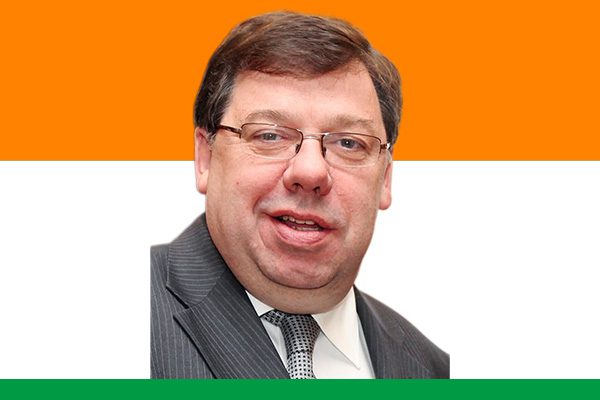
Early Life and Education
Brian Cowen was born on January 10, 1960, in Clara, County Offaly, Ireland. He grew up in a family that was actively involved in politics. His father, Bernard Cowen, served as a member of the Irish Parliament and inspired Brian’s interest in public service.
Cowen attended local schools before studying law at University College Dublin. During his student years, he developed strong leadership skills and became interested in national issues. Although he studied law, he eventually chose a career in politics.
Entry into Politics
Brian Cowen entered politics at a young age. In 1984, he was elected to Offaly County Council. Following the death of his father, he successfully contested a parliamentary by-election in the same year and became a member of Dáil Éireann, the lower house of the Irish Parliament.
As a member of the political party Fianna Fáil, Cowen quickly gained recognition for his debating skills and understanding of public policy. Over the years, he earned a reputation as a hardworking and effective politician.
Ministerial Roles
Before becoming Prime Minister, Brian Cowen served in several important government positions. He was appointed Minister for Labour, Minister for Energy, Minister for Transport, and Minister for Health and Children. Later, he served as Minister for Foreign Affairs and Minister for Finance.
These roles allowed him to gain extensive experience in government administration. As Minister for Finance, he managed economic policy during a period of rapid growth known as the “Celtic Tiger.” His experience in financial matters later became crucial when Ireland faced a severe economic crisis.
Prime Minister of Ireland
In May 2008, Brian Cowen became the Taoiseach of Ireland after the resignation of Bertie Ahern. Shortly after taking office, the global financial crisis affected Ireland’s economy. Banks faced major difficulties, unemployment increased, and government revenues declined sharply.
Cowen’s government introduced several measures to stabilize the economy. Financial support was provided to Irish banks, and efforts were made to reduce government spending. These decisions were controversial, but they were intended to prevent a complete collapse of the financial system.
The economic recession created significant challenges for the government. Public dissatisfaction grew as unemployment rose and austerity measures were introduced. Despite these difficulties, Cowen continued to work on economic recovery plans and negotiations with international financial institutions.
Challenges and Resignation
The financial crisis dominated Brian Cowen’s time as Prime Minister. His government faced criticism from opposition parties, economists, and members of the public. Political support for his administration gradually weakened.
In 2011, Cowen resigned as leader of Fianna Fáil and stepped down as Taoiseach. Shortly afterward, a general election was held, resulting in major losses for his party. His resignation marked the end of one of the most challenging periods in modern Irish political history.
Legacy
Brian Cowen’s legacy remains closely linked to Ireland’s economic crisis of 2008–2011. Supporters argue that he took difficult decisions during an unprecedented financial emergency and helped prevent greater economic damage. Critics believe that stronger actions could have been taken earlier to address the problems facing the banking sector.
Regardless of differing opinions, Brian Cowen remains an important figure in Irish political history. His long career in public service, extensive ministerial experience, and leadership during a national crisis ensure that his contribution to Ireland continues to be studied and discussed today.
Conclusion
Brian Cowen served Ireland during a period of extraordinary economic difficulty. From his early political career to his role as Prime Minister, he demonstrated dedication to public service. Although his tenure was marked by significant challenges, his leadership during a critical moment in Ireland’s history makes him a notable and influential political figure.