IRELAND
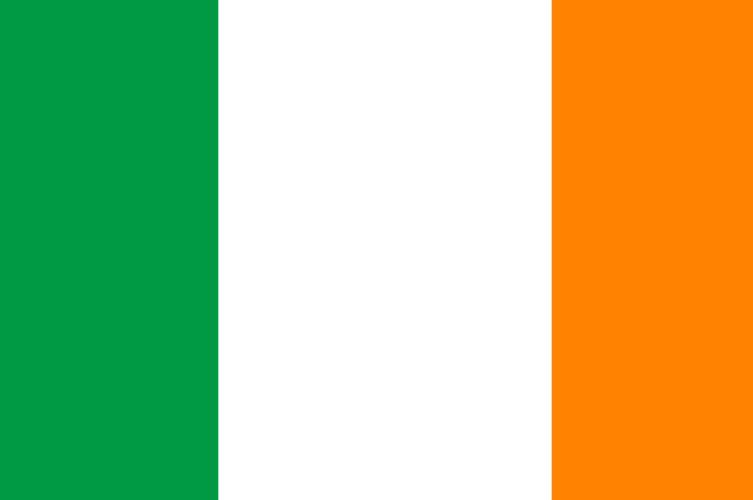
Ireland flag
The national flag of Ireland is a vertical tricolour consisting of three equal bands: green, white, and orange. The green stripe represents the Gaelic and Catholic tradition, while the orange symbolizes followers of William of Orange and the Protestant community. The white band in the center stands for peace and unity between these groups. Adopted in the 19th century and officially recognized in 1937, the Irish flag is a powerful symbol of harmony, national pride, and independence.
Ireland
Ireland is a beautiful island country located in northwestern Europe. It occupies most of the island of Ireland, while Northern Ireland is part of the United Kingdom. Known for its green landscapes, rich history, and vibrant culture, Ireland is often called the “Emerald Isle.” The country has a strong literary tradition, friendly people, and a thriving modern economy.
Geography and Climate
Ireland covers an area of approximately 70,273 square kilometers. The country is surrounded by the Atlantic Ocean, the Irish Sea, and the Celtic Sea. Its landscape consists of rolling hills, fertile plains, mountains, rivers, and rugged coastlines. The climate is temperate and influenced by the Atlantic Ocean, resulting in mild winters and cool summers. Frequent rainfall helps maintain Ireland’s lush green scenery.
History
A long and fascinating history dating back thousands of years. Ancient Celtic tribes settled on the island, shaping much of its culture and traditions. Christianity arrived in the fifth century through missionaries such as Saint Patrick, who became Ireland’s patron saint. Over the centuries, Ireland experienced Viking invasions, Norman influence, and British rule. After a long struggle for independence, most of Ireland became a self-governing state in 1922 and later declared itself a republic in 1949.
Government and Economy
Ireland is a parliamentary democracy with a president serving as the head of state and a prime minister, known as the Taoiseach, serving as the head of government. The capital city, Dublin, is the political, cultural, and economic center of the country.
Ireland has one of Europe’s strongest economies. Major industries include technology, pharmaceuticals, agriculture, financial services, and tourism. Many international companies have established their European headquarters in Ireland due to its skilled workforce and business-friendly environment.
Culture and Traditions
Irish culture is famous worldwide for its music, dance, literature, and folklore. Traditional Irish music featuring instruments such as the fiddle and harp remains popular. Ireland has produced renowned writers, including James Joyce and William Butler Yeats. Festivals, sports, and community gatherings play an important role in Irish life.
Tourism and Attractions
Ireland attracts millions of visitors every year. Popular attractions include Cliffs of Moher, the historic Blarney Castle, and the scenic Ring of Kerry. Tourists also enjoy exploring Dublin’s museums, castles, and lively cultural scene.
Conclusion
A nation rich in history, culture, and natural beauty. Its stunning landscapes, welcoming people, and strong traditions make it one of the most admired countries in the world. By combining its ancient heritage with modern development, Ireland continues to play an important role on the global stage.