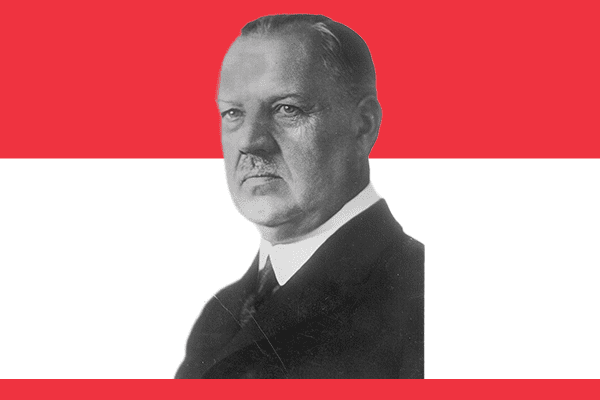
Early Life and Education
Carl Vaugoin was born on July 8, 1873, in Vienna, Austria-Hungary. He grew up in a middle-class family and received his education in Vienna. From an early age, he developed an interest in politics and public service. His upbringing in the imperial capital exposed him to the changing political atmosphere of the Austro-Hungarian Empire.
As a young man, Vaugoin became involved in Christian Social politics, a movement that emphasized conservative values, social welfare, and strong national identity. His communication skills and dedication helped him rise steadily within political circles.
Political Career
Carl Vaugoin built his political career through active participation in the Christian Social Party. He gained recognition for his organizational abilities and leadership qualities. During the early twentieth century, Austria experienced major political and social transformations, especially after the collapse of the Austro-Hungarian Empire in 1918.
Vaugoin strongly supported the newly formed Austrian Republic and worked to strengthen national institutions. He focused particularly on defence and military affairs. In 1921, he became Austria’s Minister of Defence, a position he held for several years.
As Defence Minister, Vaugoin worked actively to modernize the Austrian armed forces. He emphasized discipline, national loyalty, and stability. At a time when Austria faced political tensions and economic struggles, he believed a strong defence structure would help preserve order within the country.
Chancellor of Austria
In September 1930, Carl Vaugoin became Chancellor of Austria after the resignation of Johann Schober. His appointment came during a period of political uncertainty. Austria faced severe economic pressures caused by the global Great Depression, and political divisions were increasing rapidly.
Vaugoin led a caretaker government whose main responsibility involved preparing for upcoming national elections. Although his tenure lasted only a few months, he attempted to maintain stability and ensure the smooth functioning of government institutions.
Unlike many leaders who sought dramatic reforms, Vaugoin focused on administrative continuity and political order. He understood the fragile condition of Austrian politics and tried to avoid unnecessary conflicts. After the elections, he left office in December 1930, and Otto Ender succeeded him as chancellor.
Leadership Style and Beliefs
Carl Vaugoin supported conservative political principles and valued national unity. He believed Austria needed strong institutions, disciplined governance, and social stability. His leadership style reflected practicality rather than ideological extremism.
During his political career, Vaugoin maintained close ties with the Christian Social Party, which strongly influenced Austrian politics during the interwar years. He also defended Austria’s independence and national identity at a time when extremist political movements were growing in Europe.
Although he faced criticism from political opponents, supporters respected his administrative experience and commitment to public service.
Later Years and Legacy
After leaving high political office, Carl Vaugoin gradually withdrew from active politics. Austria entered a turbulent period during the 1930s, with increasing authoritarianism and political unrest. Despite these challenges, historians remember Vaugoin as a leader who attempted to preserve constitutional governance during uncertain times.
He died on June 10, 1949, in Vienna. His political career reflects the difficulties Austria faced during the interwar period. While his time as chancellor remained brief, his contributions to Austrian defence policy and government administration left a lasting mark on the country’s history.
Conclusion
Carl Vaugoin served Austria during one of the most difficult periods in its modern history. Through active leadership and dedication to public service, he contributed to political stability and national administration. His work as Defence Minister and Chancellor demonstrated his commitment to Austria’s institutions and democratic order.