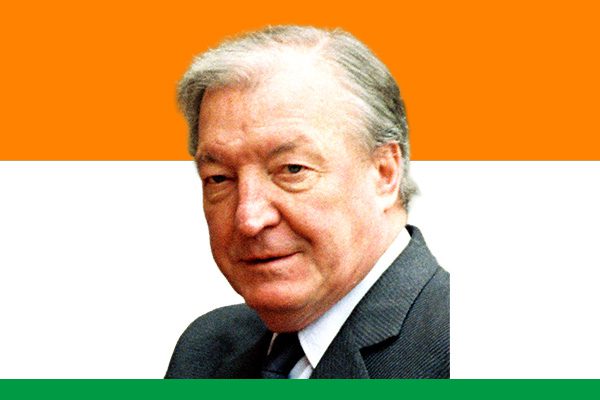
Early Life and Education
Charles James Haughey was born on September 16, 1925, in Castlebar, County Mayo, Ireland. His family later moved to Dublin, where he spent most of his childhood. He attended schools in Dublin and showed strong academic ability from a young age. After completing his education, he studied commerce and qualified as an accountant.
Haughey developed an interest in politics during his youth. He became involved with Fianna Fáil, one of Ireland’s major political parties. His ambition, intelligence, and communication skills helped him rise quickly within the party.
Entry into Politics
Haughey entered national politics in 1957 when voters elected him to Dáil Éireann, the lower house of the Irish Parliament. He quickly gained a reputation as an energetic and capable politician. Senior party leaders noticed his talent and entrusted him with important responsibilities.
During the 1960s, Haughey served in several ministerial positions. As Minister for Finance, he introduced measures that modernized parts of Ireland’s economy. He also worked as Minister for Agriculture and Fisheries, where he supported agricultural development and rural communities.
Rise to Leadership
Haughey’s political career faced challenges in 1970 when the government linked him to the Arms Crisis, a major political controversy involving alleged attempts to import weapons for Northern Ireland. Although the courts later cleared him of criminal charges, the incident damaged his reputation for a time.
However, Haughey remained active in politics and rebuilt his influence within Fianna Fáil. In 1979, he became leader of the party and Taoiseach of Ireland. His supporters admired his determination, leadership skills, and political experience.
Achievements as Taoiseach
As Taoiseach, Haughey led Ireland during difficult economic periods. The country faced high unemployment, inflation, and financial problems. Haughey introduced measures aimed at improving economic stability and reducing government spending.
He also encouraged stronger international relationships and promoted Ireland’s role within the European community. Many observers credited his governments with helping create conditions that later contributed to Ireland’s economic growth.
Haughey possessed exceptional political skills. He built alliances, managed party disputes, and maintained influence over Irish politics for many years. His leadership style often combined confidence, strategic thinking, and strong decision-making.
Controversies and Criticism
Despite his achievements, Haughey’s career remained controversial. Questions about his personal finances and lifestyle attracted public attention. Investigations later revealed that he had received large sums of money from wealthy supporters.
These revelations damaged his reputation and led many people to criticize his conduct. Critics argued that his actions undermined public trust in government. Supporters, however, continued to praise his political abilities and contributions to Ireland’s development.
The controversies eventually overshadowed many of his accomplishments and became a major part of his public legacy.
Legacy and Death
Charles Haughey retired from politics in 1992. Even after leaving office, historians, journalists, and political analysts continued to debate his impact on Ireland. Some viewed him as a visionary leader who guided Ireland through difficult times, while others focused on the ethical questions surrounding his career.
Haughey died on June 13, 2006, at the age of 80. His life remains a significant chapter in Irish political history.
Conclusion
Charles Haughey played a major role in shaping modern Ireland. Through his leadership, policy decisions, and political influence, he left a lasting impression on the nation. Although controversies affected his reputation, his contributions to Irish politics ensure that people continue to study and discuss his life and career today.