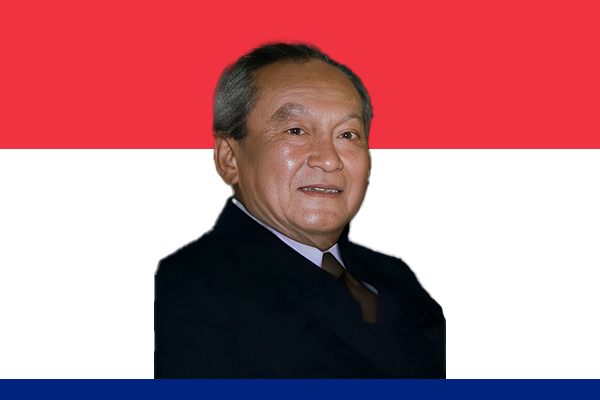
Early Life and Political Background
Chatichai Choonhavan was born in 1920 into a prominent political family. His father, Field Marshal Phibunsongkhram, served multiple terms as Thailand’s prime minister. Chatichai received education in Thailand and abroad, which broadened his worldview and sharpened his diplomatic skills. He began his career in the military and later joined the foreign service, where he represented Thailand in several key diplomatic posts.
These early experiences shaped his pragmatic approach to politics. He understood both military structures and international diplomacy, which later helped him navigate Thailand’s complex political landscape.
Rise to the Office of Prime Minister
Chatichai entered electoral politics after years of military-dominated governance in Thailand. In 1988, his party won a general election, and he became prime minister through a civilian-led government. His rise symbolized a transition toward parliamentary democracy and reduced direct military control over day-to-day governance.
As prime minister, Chatichai asserted civilian authority and worked to strengthen the role of elected institutions. He emphasized coalition politics and actively managed alliances within parliament to maintain stability.
Economic Reforms and Development Policies
Chatichai Choonhavan placed economic growth at the center of his administration. He promoted liberalization, encouraged private investment, and supported infrastructure development. His government actively opened Thailand’s economy to global markets and strengthened ties with regional partners.
He famously advocated turning “battlefields into marketplaces,” a slogan that reflected his vision of transforming conflict-prone neighboring regions into zones of trade and cooperation. Under his leadership, Thailand increased economic engagement with Indochina, especially Cambodia, Laos, and Vietnam. These policies boosted trade and positioned Thailand as a regional economic hub.
Foreign Policy and Regional Engagement
Chatichai actively reshaped Thailand’s foreign policy. He reduced ideological hostility toward communist neighbors and promoted dialogue and cooperation. His administration improved relations with China and supported peace efforts in Southeast Asia.
By emphasizing diplomacy over confrontation, Chatichai helped Thailand adapt to the changing geopolitical environment after the Cold War. His foreign policy strengthened regional stability and expanded Thailand’s influence within Southeast Asia.
Challenges, Criticism, and Downfall
Despite his achievements, Chatichai’s government faced serious challenges. Critics accused his administration of widespread corruption and cronyism. Media outlets and political opponents frequently described his cabinet as excessively business-oriented and vulnerable to unethical practices.
Tensions between the civilian government and the military steadily increased. In 1991, the military staged a coup, removed Chatichai from office, and ended his reformist agenda. Although the coup abruptly halted his leadership, it also highlighted ongoing struggles between democratic governance and military power in Thailand.
Legacy and Historical Significance
Chatichai Choonhavan left behind a complex but influential legacy. He actively shifted Thailand toward economic modernization and regional integration. His policies encouraged openness, trade, and diplomacy at a crucial historical moment.
Although controversy surrounded his administration, historians recognize Chatichai as a leader who challenged traditional power structures and expanded Thailand’s economic and diplomatic horizons. His tenure remains a significant chapter in Thailand’s journey toward democratic governance and regional leadership.
Conclusion
Prime Minister Chatichai Choonhavan led Thailand with a forward-looking vision that emphasized growth, cooperation, and civilian rule. Through active economic reforms and diplomatic engagement, he helped redefine Thailand’s role in Southeast Asia. Despite an abrupt end to his government, his ideas and policies continue to influence Thailand’s political and economic development today.