Mr. Christian Kern
In Office: 17 May 2016 – 18 December 2017
Political Party: Austrian People’s Party
Home State: Sankt Pölten
Lifespan: born 1966
Country: Austria
Image credits available here.
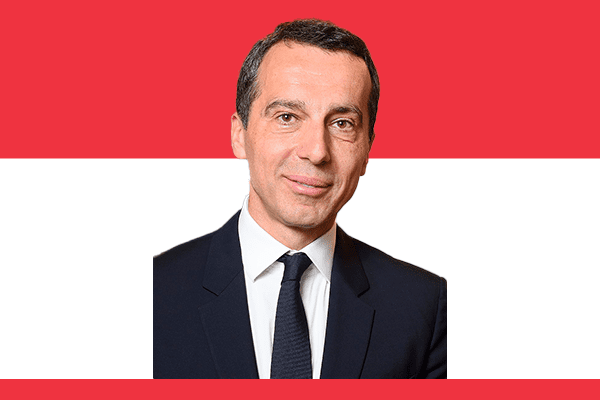
Early Life and Education
Christian Kern was born on January 4, 1966, in Vienna, Austria. He grew up in a middle-class family and developed a strong interest in politics and economics at an early age. Kern studied journalism and communication at the University of Vienna, where he gained knowledge about media, public affairs, and political systems.
Although he did not complete a traditional academic path in economics, he developed strong management and leadership abilities through professional experience. His practical understanding of business later helped him become a respected executive and politician.
Career in Business and Public Service
Before entering politics, Christian Kern established himself as a successful business leader. He worked in several management positions and eventually joined Austria’s public railway company, Austrian Federal Railways (ÖBB). Through determination and strategic planning, he rose to become the company’s chief executive officer in 2010.
As CEO of ÖBB, Kern modernized railway services and improved the company’s international reputation. He invested in infrastructure, promoted environmentally friendly transportation, and increased efficiency within the organization. Under his leadership, the railway company achieved financial stability and expanded its influence across Europe.
Kern’s success in business management earned him recognition as an innovative and practical leader. Many people admired his ability to combine economic growth with social responsibility.
Entry into Politics
In 2016, the Social Democratic Party of Austria selected Christian Kern as its leader after Chancellor Werner Faymann resigned. Soon afterward, Kern became Chancellor of Austria. His appointment marked a significant shift because he entered politics from the corporate world rather than through a long parliamentary career.
As chancellor, Kern introduced a forward-looking political agenda. He focused on economic modernization, job creation, digital innovation, and social equality. He encouraged investment in technology and education to prepare Austria for future challenges.
Leadership as Chancellor
During his tenure, Christian Kern actively addressed several important national and international issues. Europe faced political uncertainty, migration challenges, and economic competition at the time. Kern promoted cooperation within the European Union and supported policies that strengthened unity among European nations.
Domestically, he emphasized employment opportunities and support for working families. He proposed reforms to improve Austria’s economy while protecting social welfare programs. Kern also encouraged innovation and entrepreneurship to make Austria more competitive in the global market.
Unlike many traditional politicians, Kern communicated directly and openly with citizens. He used modern communication strategies and promoted transparency in government. His leadership style appealed especially to younger voters who wanted progressive reforms and practical solutions.
Political Challenges and Resignation
Despite his ambitious plans, Christian Kern faced political challenges during his leadership. Austria experienced growing political polarization, and opposition parties gained support. Internal disagreements within the coalition government also limited his ability to implement reforms fully.
In the 2017 parliamentary elections, the Social Democratic Party lost power to the Austrian People’s Party led by Sebastian Kurz. After the election, Kern stepped down as chancellor. Although his term lasted only a short time, he left an impression as a reform-oriented and modern leader.
Later Activities and Legacy
After leaving office, Christian Kern remained active in business and international affairs. He participated in consulting, investment, and policy discussions across Europe. His experience in both politics and business made him a respected voice on economic development and European cooperation.
Kern’s legacy reflects his efforts to modernize Austrian politics and connect economic growth with social progress. He demonstrated how leadership skills from the corporate sector could contribute to public service and national development.
Conclusion
Christian Kern played an important role in Austrian politics during a period of change and uncertainty. Through active leadership, economic vision, and commitment to modernization, he helped shape discussions about Austria’s future. His career continues to inspire people interested in leadership, innovation, and public service.