Early Life and Education
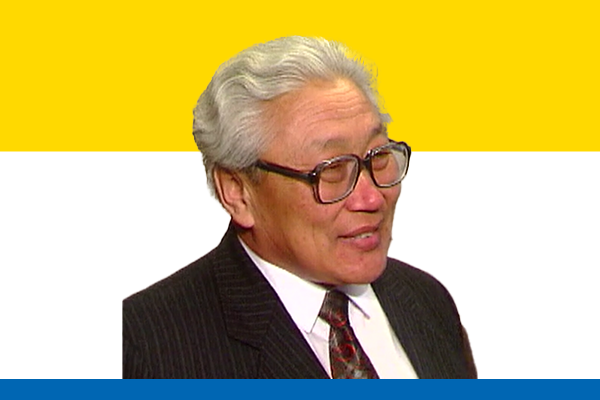
Dashiin Byambasüren was born on June 20, 1942, in Zavkhan Province, Mongolia. He grew up during a time when Mongolia was under a socialist system closely aligned with the Soviet Union. From a young age, he showed strong academic ability and interest in economics. He pursued higher education at the Irkutsk Institute of National Economy in the Soviet Union, where he specialized in finance and economics. His education helped him develop the skills needed to manage national economic policies later in his career.
Early Political Career
Byambasüren began his career as an economist and worked in various government financial institutions. His expertise and dedication helped him rise steadily through the ranks. He became involved with the Mongolian People’s Revolutionary Party, which was the ruling communist party at the time. He held several important positions, including Minister of Finance. His experience in economic management made him an important figure in the government during a time when Mongolia faced economic challenges.
Role in Democratic Transition
The late 1980s and early 1990s were a turning point in Mongolia’s history. Inspired by democratic movements in Eastern Europe and the weakening of Soviet influence, Mongolian citizens demanded political reforms. Peaceful protests took place in the capital city, Ulaanbaatar, calling for democracy and free elections.
In 1990, Dashiin Byambasüren became Prime Minister, making him the first leader to head the government during Mongolia’s transition from a socialist state to a democratic nation. His leadership was crucial in ensuring that the transition remained peaceful. He worked with reformers and opposition leaders to introduce a multi-party political system.
Economic and Political Reforms
During his time as Prime Minister from 1990 to 1992, Byambasüren introduced major reforms. He helped end the one-party system and supported the adoption of a new democratic constitution. This constitution guaranteed basic rights such as freedom of speech, free elections, and political participation.
Economically, Mongolia faced serious difficulties after losing Soviet financial support. Byambasüren introduced policies to move Mongolia from a centrally planned economy to a market-based economy. This included privatization of state-owned enterprises and encouragement of private business. Although the transition was difficult, these reforms laid the foundation for Mongolia’s modern economy.
Leadership Style and Legacy
Dashiin Byambasüren was known for his calm, practical, and responsible leadership. He believed in peaceful reform rather than conflict. His ability to work with different political groups helped Mongolia avoid violence during its democratic transition. This peaceful transformation is considered one of the most successful democratic movements in Asia.
His legacy is remembered as a leader who helped Mongolia achieve democracy and economic independence. He played a key role in shaping modern Mongolia’s political and economic systems.
Conclusion
Dashiin Byambasüren remains an important figure in Mongolia’s history. As Prime Minister during a critical period, he guided the country through major political and economic changes. His leadership helped Mongolia successfully transition from communism to democracy. Today, he is respected as one of the key architects of Mongolia’s modern democratic state.