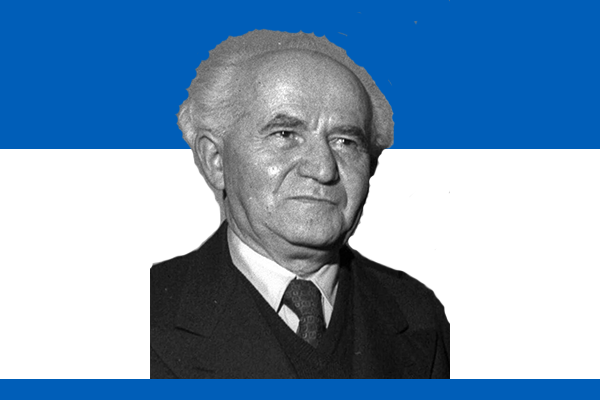
Early Life and Formation of Ideals
David Ben-Gurion was born on October 16, 1886, in Płońsk, then part of the Russian Empire. He grew up in a family deeply committed to Jewish identity and cultural revival. As a young boy, he absorbed stories of Jewish history, which ignited his passion for a national homeland. He joined Zionist youth groups and began shaping his political ideas early. In 1906, he moved to Ottoman-ruled Palestine, where he worked as a farmer and teacher. These experiences strengthened his belief that Jewish settlement would lay the foundation for a future state.
Rise as a Zionist Leader
Ben-Gurion quickly emerged as a leading figure in the Zionist labor movement. He organized workers, encouraged agricultural communities, and promoted Hebrew as a unifying language. During World War I, the Ottoman authorities expelled him for his Zionist activities, so he relocated to the United States. There, he continued to advocate for Jewish self-determination. After the war, he returned to Palestine and helped establish the Histadrut, the national labor federation, which became a major political force. His leadership and strategic thinking positioned him at the center of the Zionist movement.
Leadership During Turbulent Times
Throughout the 1930s and 1940s, Ben-Gurion guided the Jewish community through increasing tensions with both British authorities and Arab populations. He led diplomatic negotiations, organized immigration, and strengthened defense groups like the Haganah. He responded to British restrictions by intensifying political pressure and encouraging settlement expansion. When World War II began, he supported the Allied war effort while still demanding the right to a Jewish homeland. After the Holocaust, he pushed even harder for statehood, arguing that European tragedy proved the need for national independence.
Declaration of the State of Israel
Ben-Gurion played the decisive role in the final push toward independence. On May 14, 1948, he declared the establishment of the State of Israel. As fighting erupted immediately after the declaration, he directed military strategy and oversaw unification of various defense groups into the Israel Defense Forces (IDF). His leadership during the War of Independence helped the new state survive despite overwhelming challenges. He also supervised the integration of hundreds of thousands of Jewish immigrants who arrived from Europe, the Middle East, and North Africa.
Prime Minister and Nation Builder
As Israel’s first Prime Minister, Ben-Gurion focused on nation building. He promoted infrastructure projects, encouraged agricultural development, and supported scientific research. He strengthened state institutions and insisted on a strong secular government. His policies shaped the foundation of Israeli democracy, military strength, and economic growth. He also prioritized the development of the Negev Desert, believing it held the key to Israel’s long-term sustainability. His forward-looking strategies created lasting structures for Israel’s governance and defense.
Later Years and Legacy
Ben-Gurion resigned from office in 1963 but continued to influence national politics from his home in the Negev settlement of Sde Boker. He wrote extensively about Zionism and Israeli history, and he remained active in public debates. He passed away on December 1, 1973. Israelis remember him as the driving force behind the creation of their state. His vision, determination, and leadership still shape the nation’s identity and institutions. He stands as one of the most influential leaders in modern Jewish and Middle Eastern history.