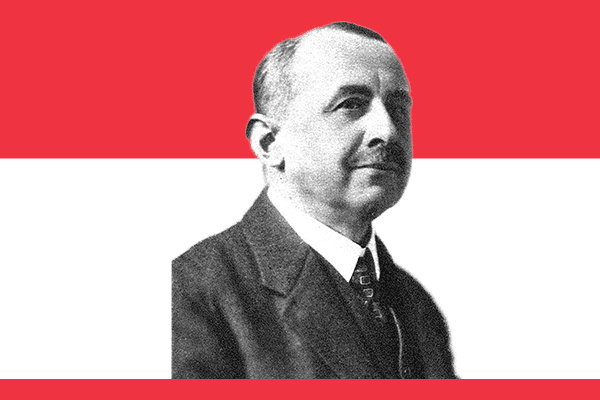
Early Life and Education
Ernst Streeruwitz was born on September 23, 1874, in Mies, Bohemia, which was then part of the Austro-Hungarian Empire. He grew up in a family connected to industry and business, which influenced his future career choices. He pursued higher education in engineering and technical studies, gaining knowledge that later helped him succeed in the industrial sector.
Instead of limiting himself to technical work, Streeruwitz actively participated in public affairs and economic discussions. His education and professional experience shaped his practical approach to politics and administration.
Career in Industry
Before entering politics, Ernst Streeruwitz established himself as a successful industrialist. He worked in the manufacturing and engineering sectors, where he earned recognition for his leadership and organizational skills. He became involved in industrial associations and represented business interests in economic matters.
Streeruwitz believed that economic growth and industrial progress could strengthen Austria’s future. He encouraged modernization and supported cooperation between businesses and the government. His achievements in industry increased his public reputation and opened the path to political leadership.
Entry into Politics
Ernst Streeruwitz joined the Christian Social Party, one of Austria’s major political groups during the interwar period. He gained respect as a moderate and practical politician who focused on economic reform and national stability. During a time of political tension, he promoted cooperation rather than division.
He served in the Austrian Parliament and became involved in important national discussions. Through his speeches and policies, he emphasized democratic values and constitutional order. His balanced political style attracted support from many citizens and colleagues.
Chancellor of Austria
In May 1929, Ernst Streeruwitz became Chancellor of Austria. He assumed office during a difficult period marked by political conflict, economic uncertainty, and growing extremist movements across Europe. Despite these challenges, he worked actively to maintain stability and protect democratic institutions.
As chancellor, Streeruwitz supported constitutional reforms aimed at improving Austria’s political system. He attempted to strengthen cooperation among political parties and reduce tensions within the government. He also addressed economic concerns and encouraged policies that could support industrial and financial recovery.
Although he showed determination and leadership, political disagreements weakened his government. After only a few months in office, he resigned in September 1929. Even though his tenure was short, he demonstrated commitment to democratic principles and responsible governance.
Political Views and Leadership Style
Ernst Streeruwitz valued moderation, dialogue, and constitutional democracy. Rather than encouraging political extremism, he promoted compromise and peaceful cooperation. He believed leaders should work actively to solve problems and strengthen national unity.
His leadership style reflected his background in industry. He approached political issues with practicality and organization. Instead of focusing on personal power, he concentrated on improving government efficiency and public confidence.
Later Life and Legacy
After leaving office, Streeruwitz gradually withdrew from active politics but remained respected in Austrian public life. He continued participating in economic and social discussions while observing the political changes occurring in Europe.
He died on November 19, 1952, in Vienna, Austria. Historians remember him as a thoughtful and moderate leader who defended democracy during a turbulent era. Although his time as chancellor was brief, his efforts to promote stability and reform left a meaningful impact on Austrian political history.
Conclusion
Ernst Streeruwitz played an important role in Austria’s political and industrial development during the interwar years. Through active leadership, democratic values, and practical decision-making, he worked to guide Austria through a challenging period. His dedication to constitutional government and national stability continues to earn recognition in Austrian history.