Mr. Fernando Tambroni
In Office: 26 March 1960 – 27 July 1960
Political Party: Christian Democratic
Home State: Città di Ascoli Piceno
Lifespan: 1901–1963
Country: Italy
Image credits available here.
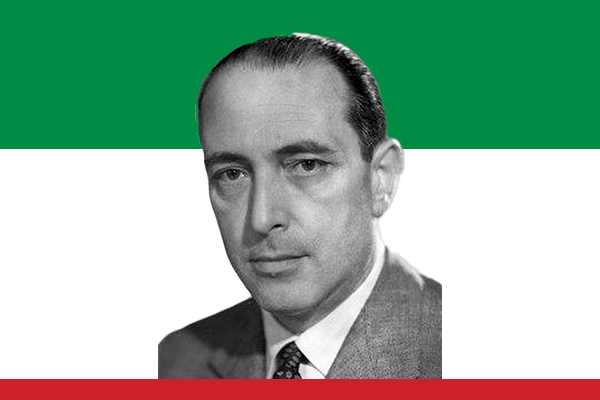
Early Life and Political Beginnings
Fernando Tambroni was born on November 25, 1901, in Ascoli Piceno, Italy. He pursued law at the University of Macerata, where he developed a passion for politics and justice. During the early years of his career, he practiced law and actively engaged in political discussions that centered on Italy’s reconstruction after World War II. He soon joined the Christian Democracy (Democrazia Cristiana, DC) party, a dominant force in post-war Italian politics. His dedication and organizational skill helped him climb rapidly within the party’s ranks.
Rise in Political Influence
Throughout the 1940s and 1950s, Tambroni actively served in several ministerial positions. He held roles such as Minister of the Interior, Minister of Budget, and Minister of the Treasury. In each position, he demonstrated a pragmatic approach to governance and a deep concern for Italy’s economic stability. Tambroni worked hard to strengthen public finances, improve government efficiency, and restore citizens’ trust in democratic institutions. His administrative competence earned him recognition as a reliable and disciplined statesman within his party.
Becoming Prime Minister
In March 1960, President Giovanni Gronchi appointed Tambroni as Prime Minister. At the time, Italy faced political instability, with the Christian Democrats struggling to maintain a parliamentary majority. Tambroni accepted the challenge and actively formed a government that relied on the parliamentary support of the Italian Social Movement (MSI), a neo-fascist party. This decision shocked many Italians and generated intense opposition, as it contradicted the democratic values established after the fall of Fascism.
Governance and Controversy
As Prime Minister, Tambroni worked to restore governmental order and manage Italy’s economic challenges. However, his collaboration with the MSI created a political storm. Demonstrations erupted across Italy, especially in Genoa, where citizens protested against the MSI’s planned congress in the city. When police responded with force, violent clashes ensued, leading to multiple deaths and injuries. These tragic events severely damaged Tambroni’s credibility and legitimacy. Instead of uniting Italy, his government deepened political divisions and provoked widespread condemnation.
Resignation and Political Aftermath
Recognizing the growing unrest and the loss of parliamentary support, Tambroni resigned in July 1960, only a few months after assuming office. His resignation ended one of the shortest and most turbulent premierships in Italian history. Despite his brief tenure, Tambroni’s government marked a turning point for Italy. It reaffirmed the nation’s rejection of any return to authoritarianism and strengthened the country’s commitment to democratic principles.
Later Life and Legacy
After stepping down, Tambroni withdrew from frontline politics and focused on writing and reflection. He remained active in intellectual circles until his death on February 18, 1963, in Rome. Historians continue to debate his legacy—some view him as a capable administrator who faced impossible circumstances, while others criticize him for compromising democratic values. Nevertheless, his leadership highlighted the fragile balance between political stability and ideological conflict in post-war Italy.
Conclusion
Prime Minister Fernando Tambroni’s political journey illustrates the challenges of governing a divided nation during a period of reconstruction and ideological struggle. He actively shaped economic and political policies with determination, yet his alliances and methods sparked controversy that defined his legacy. His brief rule reminds Italians of the enduring importance of democratic integrity and the dangers of political extremism.