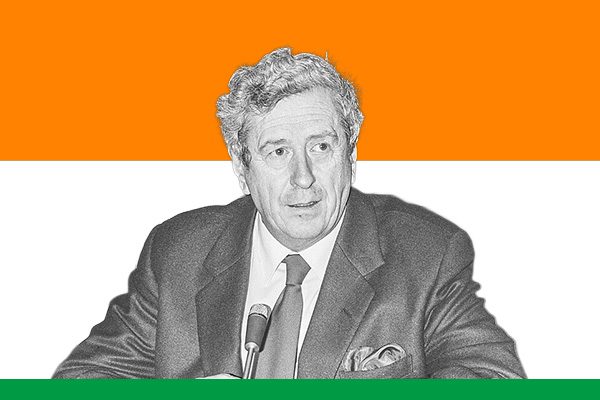
Early Life and Education
Garret FitzGerald was born on February 9, 1926, in Dublin, Ireland. He grew up in a politically active family. His father served as Ireland’s first Minister for External Affairs, which exposed him to politics from an early age. FitzGerald studied at University College Dublin and later qualified as a barrister. However, he chose a career in economics, journalism, and public affairs rather than practicing law. His strong analytical skills and interest in public policy earned him respect as an economist and commentator.
Entry into Politics
FitzGerald joined the Fine Gael Party and entered national politics in 1969 when voters elected him to Dáil Éireann, Ireland’s parliament. He quickly gained recognition for his intelligence and innovative ideas. In 1973, he became Minister for Foreign Affairs. During this period, he played a major role in strengthening Ireland’s position within Europe and promoting cooperation between communities on the island of Ireland.
Leadership as Taoiseach
In 1977, FitzGerald became leader of Fine Gael. Four years later, he assumed the office of Taoiseach for the first time. Although political instability shortened his first term, he returned to power in December 1982 and led the country until 1987. During his leadership, he promoted social and political reforms. He encouraged a more open and inclusive society and supported discussions about issues such as divorce, contraception, and constitutional reform. His government aimed to modernize Ireland while preserving democratic values.
Contribution to Peace and Northern Ireland
One of FitzGerald’s greatest achievements involved improving relations between Ireland and Northern Ireland. He believed that dialogue and cooperation could reduce tensions and create lasting peace. His efforts contributed significantly to the 1985 Anglo-Irish Agreement, which gave the Irish government a consultative role in Northern Ireland’s affairs. Many historians regard this agreement as an important step toward the peace process that later led to the Good Friday Agreement.
Intellectual Influence and Later Years
Beyond politics, FitzGerald earned recognition as a writer, academic, and public intellectual. He published several books and regularly contributed articles on economics, politics, and social issues. Even after retiring from active politics in 1992, he continued to participate in public debates and advocate for European cooperation and democratic reform. His thoughtful analysis influenced policymakers and citizens alike.
Legacy
Garret FitzGerald left a lasting mark on Ireland. His commitment to modernization, European integration, and peaceful cooperation helped transform the country during a crucial period of its history. People remember him as a courageous reformer, a skilled diplomat, and a leader who looked toward the future. His work continues to inspire those who value democracy, tolerance, and public service.
Conclusion
Garret FitzGerald dedicated his life to improving Ireland. Through his leadership, intellectual contributions, and commitment to peace, he helped build a more open and progressive nation. His legacy remains an important part of Irish political history, and future generations continue to learn from his vision and dedication to public service.