Mr. Gerrit de Vries
In Office: 4 June 1872 – 27 August 1874
Political Party: Independent Liberal
Home State: Haarlem
Lifespan: 1818–1900
Country: Netherland
Image credits available here.
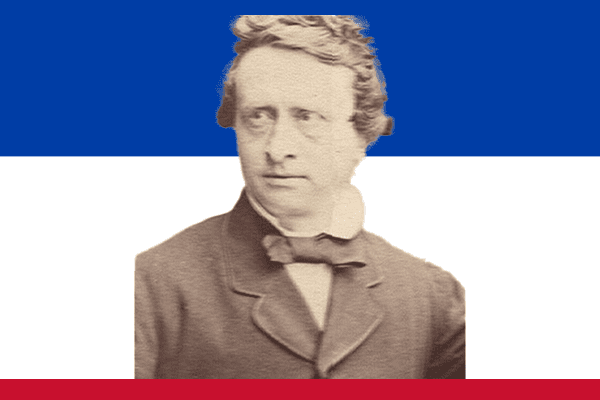
Early Life and Education
Gerrit de Vries grew up in Haarlem in a family that valued education and intellectual development. His father served as a Mennonite minister, which exposed him to a disciplined and thoughtful environment during childhood. De Vries showed strong academic abilities and pursued higher education in law. Through his legal studies, he developed deep knowledge of constitutional principles, administration, and justice.
After completing his education, he began his professional career as a jurist. His legal expertise helped him gain recognition among political and administrative leaders. As he worked in provincial administration and legal institutions, he gained valuable experience in governance. This early professional development prepared him for a future role in national politics and government leadership.
Political Career
Gerrit de Vries gradually entered national politics and became associated with liberal political ideas that influenced the Netherlands during the nineteenth century. He worked in several administrative roles and served as a member of important governmental bodies. His reputation as a capable administrator and legal expert strengthened his standing in the political community.
Before becoming Prime Minister, he served in government positions, including Minister of Justice. In this role he attempted to modernize the judicial system and proposed reforms to improve the organization of courts and legal procedures. Although some of these reforms faced political opposition, his efforts demonstrated his commitment to strengthening the rule of law and improving public administration.
De Vries also served in the Council of State and participated in various government commissions. These roles allowed him to influence policy discussions and administrative reforms in the Netherlands.
Prime Minister of the Netherlands (1872–1874)
In 1872, after the death of the influential liberal leader Johan Rudolph Thorbecke, Gerrit de Vries was asked to form a new government. He accepted the responsibility and became Prime Minister of the Netherlands on 4 June 1872.
His cabinet, often referred to as the De Vries–Fransen van de Putte cabinet, represented liberal political ideas and attempted to continue the reform-oriented policies of the previous government. During his leadership, the administration addressed political challenges related to parliamentary cooperation, governance reforms, and legal policy.
However, his government faced several difficulties in parliament. Some legislative proposals, including attempts to reform the judicial organization, encountered strong political resistance. These conflicts weakened the cabinet’s position and limited the progress of major reforms. Despite these challenges, De Vries maintained administrative stability and guided the government through a transitional political period.
Later Career and Public Service
After leaving the office of Prime Minister in 1874, Gerrit de Vries continued to serve the Dutch state in various roles. He briefly served as a member of parliament and later returned to the Council of State, where he worked for many years. His experience and expertise made him a respected adviser in governmental affairs.
In addition to these responsibilities, he participated in several state commissions that examined important public policy issues. Through these roles he contributed to administrative reforms and national policy discussions long after his premiership had ended.
Legacy
Gerrit de Vries died on 4 March 1900 in The Hague at the age of eighty-two. His career reflected dedication to law, governance, and public administration. Historians often describe him as more of an administrator than a charismatic political leader, but his steady leadership and legal expertise helped maintain governmental continuity during an important period in Dutch history.
Today, he remains remembered as the eleventh Prime Minister of the Netherlands and a key figure in nineteenth-century liberal politics. His work in legal reform, administrative governance, and public service contributed to the development of modern Dutch political institutions.